NIR spectroscopy blog
Practical NIR spectroscopy guides: RPD and SEP, calibration, instruments and industry use, written in plain words by a working consultant. Browse by topic.
 Latest NIR in Pet Food Manufacturing: Improving Fat Coating and Blend UniformityDiscover how NIR enhances pet food manufacturing by improving fat coating, drying control, and blend uniformity. Practical insights from a seasoned NIR consulta.Read the article
 -
 Read the article NIR Calibration Methods Compared: MLR, PCR, PLS, and ANN A grain elevator manager once told me his NIR was "broken" because protein predictions kept drifting on incoming wheat. The instrument was fine.
 -
 Read the article NIR in the Feed Mill: How to Stop Paying For Protein You're Not Getting A practical guide to using NIR at the raw material intake of a feed mill — how it saves money, catches supplier fraud, and improves formula accuracy.
 -
 Read the article The Systematic Approach to Diagnosing NIR Calibration Problems A five-step step-by-step workflow for diagnosing and resolving NIR calibration problems in grain, feed, and dairy operations.
 -
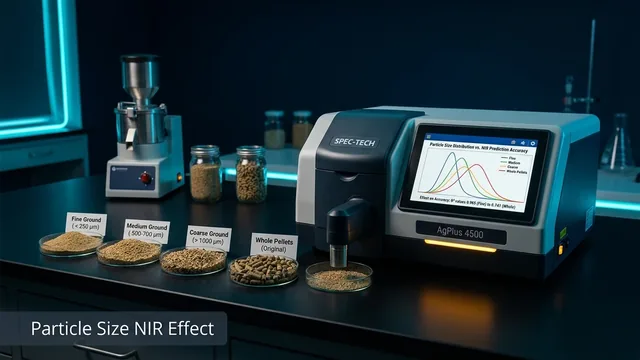 Read the article Why Particle Size Controls Your NIR Accuracy More Than Anything Else Discover how particle size affects your NIR accuracy and learn practical steps to improve lab results in grain handling and dairy processing.
 -
 Read the article Why Do NIR Outliers Appear — and When Should You Remove Them? Outliers in NIR data can skew results. Learn when to remove or keep them to ensure data accuracy in grain, dairy, and feed operations.
 -
 Read the article NIR vs. MIR and Raman in Oilseed Labs: Strengths, Limitations, and ROI NIR vs MIR and Raman in oilseed labs — practical comparison of accuracy, cost, and crushing plant ROI.
 -
 Read the article NIR GIGO in Practice: A Soybean Protein Case Study and the Cost of Poor Data Quality Data quality control strategies are only as good as the real-world pressure they're tested against. A soybean protein calibration failure show exactly how garbage data enters an NIR program and what it costs when it does.
 -
 Read the article NIR in Grain Receiving: What It Measures and Calibration Essentials Understanding how NIR spectroscopy works at the physics level is the foundation. But grain receiving operations need to go further — knowing exactly what parameters NIR can reliably measure at the scale, what calibration is required, and what happens when calibration isn't maintained.
 -
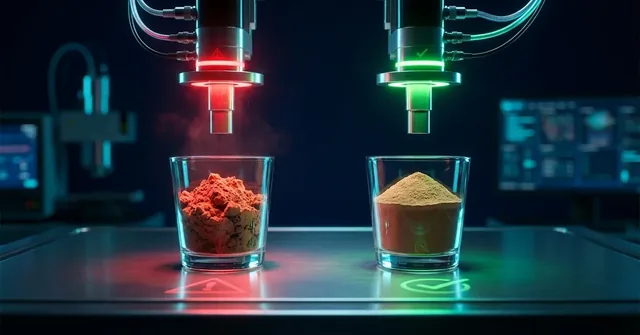 Read the article Sample Preparation Do's and Don'ts How disciplined NIR sample preparation in food and feed labs prevents calibration errors and improves prediction accuracy.
 -
 Read the article NIR Data Quality: The GIGO Principle and Sources of Garbage Data in NIR Analysis The GIGO principle in NIR: six sources of bad data, real cost benchmarks, and a pre-session quality checklist for food and feed labs.
 -
 Read the article Understanding NIR Ash Prediction: How It Works and When to Trust It How NIR ash prediction works in grain and feed QC, when to rely on it, and how to validate results against wet chemistry.
 -
 Read the article NIR Calibration Validation Pitfalls and Keeping Performance Reliable Over Time How to avoid NIR calibration validation pitfalls and maintain reliable predictions in food and feed labs.
 -
 Read the article Connecting NIR to Formulation Software and Implementing NIR in Agricultural Operations Getting NIR data is one thing — connecting it to your formulation software and building a reliable implementation process is where real gains come from.
 -
 Read the article NIR Calibration Troubleshooting Checklist: 10 Problems and How to Fix Them A practical 10-step NIR calibration troubleshooting checklist for food and feed labs — diagnose drift, prep errors, and model failures.
 -
 Read the article NIR Spectroscopy in Food Quality Assurance: Where It Fits and Where It Falls Short NIR spectroscopy in food QA: real applications, accuracy benchmarks, and honest limits across grain, dairy, meat, and bakery operations.
 -
 Read the article The 5 Stats That Actually Matter for NIR Model Evaluation (R² is Not One of Them) Five stats NIR calibration reports must include — RMSEP, RPD, bias, RMSECV/RMSEC ratio, and SEP vs SEL explained.
 -
 Read the article Stop Losing Money on NIR: The Calibration Mistakes Costing Feed Mills Thousands What operations managers get wrong about NIR calibration — and how to fix it before it costs you.
 -
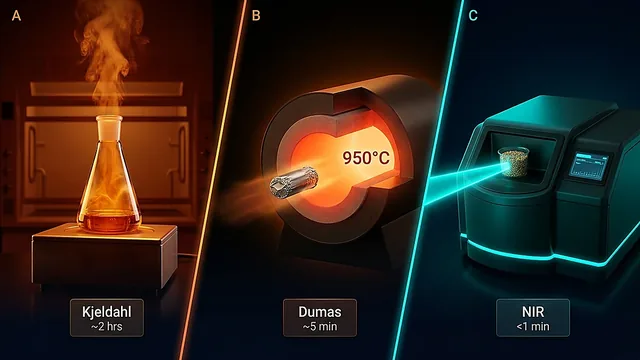 Read the article Kjeldahl vs Dumas vs NIR: Real Cost and Accuracy in Food Labs Kjeldahl, Dumas, and NIR protein methods compared on cost, speed, accuracy, and regulatory fit for food and feed labs.
 -
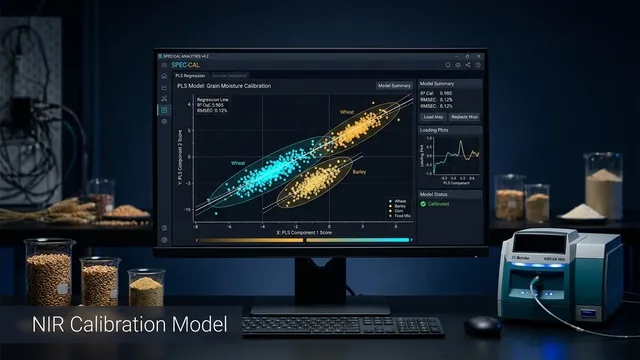 Read the article PLS Regression for NIR: Step-by-Step Guide for Food and Feed Calibration A practical step-by-step guide to PLS regression for NIR calibration in grain, feed, and food operations.
 -
 Read the article Why As-Is Values Are Lying to You (And How Dry Matter Basis Fixes It) Why as-is moisture analysis produces misleading NIR results and how dry matter basis conversion fixes it.
 -
 Read the article Does NIR Save Money on Raw Materials? Real Cost Reduction Explained Investing in NIR saves money on raw materials by reducing waste and improving efficiency. Learn how to calculate the real cost reduction for your plant.
 -
 Read the article Why Sample Temperature Affects NIR Results and How to Control It Sample temperature shifts NIR spectra and skews results — here's how food and feed labs control it.
 -
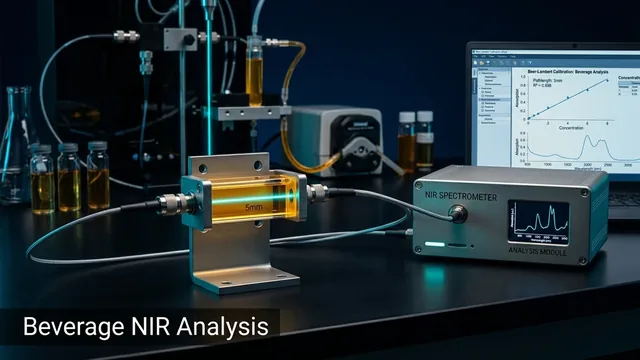 Read the article Beer-Lambert Law in NIR: Fundamentals and Calibration Method Selection How the Beer-Lambert Law shapes NIR calibration method selection in grain, feed, and food quality labs.
 -
 Read the article Building NIR Calibration Models and Avoiding Common Chemometric Mistakes How to build NIR calibration models that perform reliably in grain, feed, and dairy operations while avoiding common chemometric mistakes.
 -
 Read the article NIR Applications in Grain, Feed, and Dairy — and What It Delivers in Practice NIR grain and feed applications, real-world challenges, and what NIR spectroscopy delivers in grain, dairy, and food operations.
 -
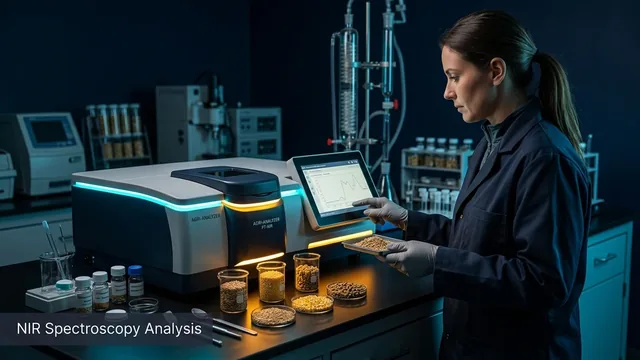 Read the article What Questions Should You Ask a NIR Vendor Before You Sign? A practical vendor evaluation checklist covering calibration support, hidden costs, TCO, and the key questions NIR buyers must ask.
 -
 Read the article NIR Calibration for Better QC: Reducing Drift and Improving Accuracy How to prevent NIR calibration drift and maintain accuracy in grain, feed, and dairy QC operations.
 -
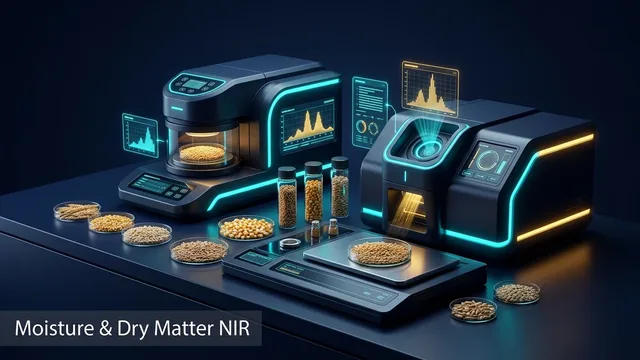 Read the article NIR for Grain Moisture: Applications in Combines, Dryers, and Storage How NIR moisture measurement supports grain decisions at the combine, dryer, and storage bin — with calibration and implementation guidance.
 -
 Read the article Why Does Your Reference Method Limit NIR Accuracy? Lab Error Study Explained Discover why your reference method limits NIR accuracy and learn how to improve it. important insights for QC managers in grain, dairy, and feed industries.
 -
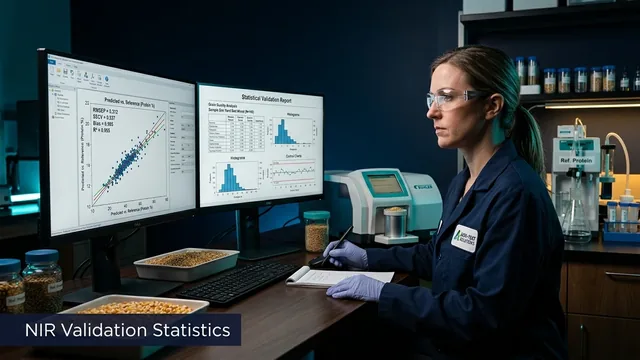 Read the article How to Validate NIR Against Wet Chemistry: Setting Up a Parallel Testing Program Validate your NIR against wet chemistry effectively with a parallel testing program. Learn the steps and insights from an expert consultant.
 -
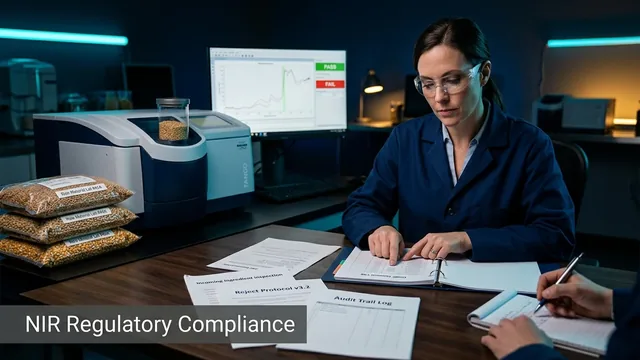 Read the article NIR Incoming Inspection: Crafting a Rejection Protocol That Passes Audits Build an audit-proof NIR rejection protocol with documentation, clear criteria, and regular calibrations. Speed up inspections and ensure accuracy.
 -
 Read the article NIR Accuracy and Calibration for Beverage Quality Control Getting accurate NIR measurements in beverage production requires more than a good instrument — it requires understanding what accuracy actually looks like in liquid matrices and how to build calibrations that hold up in production. This article covers accuracy expectations, moisture vs.
 -
 Read the article AI and Machine Learning in NIR: Practical Applications for Food and Feed Labs How AI and machine learning improve NIR calibration, machine feed monitoring, and data management in food and feed labs.
 -
 Read the article How to Transfer NIR Calibration Between Instruments Effectively Learn how to transfer NIR calibration between instruments efficiently without rebuilding it. Save time and maintain accuracy in your lab operations.
 -
 Read the article NIR Spectroscopy in Flour Milling, Pet Food, and Grain Ethanol Applications How NIR spectroscopy in flour milling, pet food, and grain ethanol delivers ROI when deployed correctly.
 -
 Read the article As-Is vs. Dry Matter in NIR: Understanding the Key Differences Understanding the difference between as-is and dry matter in NIR is critical for accurate quality control in food manufacturing. Learn more about improving…
 -
 Read the article Can NIR Replace Kjeldahl, Soxhlet, and Karl Fischer? AOAC Methods vs. NIR NIR vs Karl Fischer, Kjeldahl, and Soxhlet — where spectral analysis wins and where wet chemistry still leads.
 -
 Read the article Comprehensive Chemometrics PLS Regression Tutorial for NIR Spectroscopy A practical guide to PLS regression in NIR spectroscopy — model building, validation, and common failure points for food and feed labs.
 -
 Read the article NIR Calibration Models for Food & Feed: 7 Practices to Prevent Drift and Failed Predictions Key practices for building NIR calibration models that hold up in food and feed production environments.
 -
 Read the article NIR Spectroscopy Review: Measurement, Calibration Metrics, and Reference Methods A practical NIR spectroscopy review covering calibration metrics, reference data quality, and model maintenance for grain, feed, and dairy labs.
 -
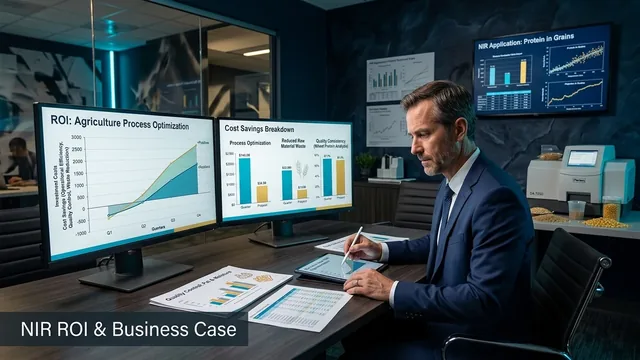 Read the article How to Calculate NIR Spectroscopy ROI: Building the Business Case How to calculate NIR spectroscopy ROI with real numbers, payback periods, and a business case approach that works.
 -
 Read the article NIR Spectroscopy in Dairy, Feed Mills, and Regulatory Compliance Where NIR spectroscopy in dairy, feed mills, and grain operations delivers measurable results and regulatory compliance.
 -
 Read the article NIR Spectroscopy Applications: Where It Pays for Itself in Food and Feed Where nir spectroscopy applications deliver measurable ROI in grain, dairy, feed mills, and oilseed processing.
 -
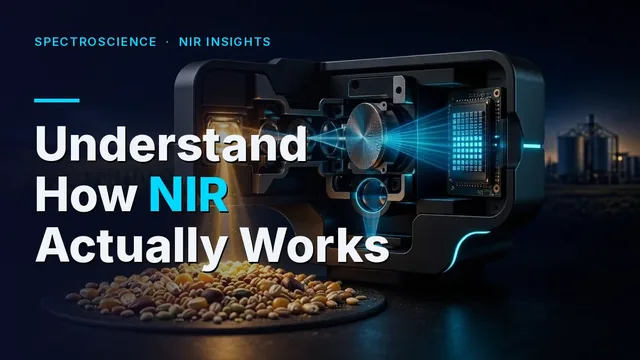 Read the article NIR Spectroscopy: How It Works, Instrument Components, and Wet Chemistry Comparison How NIR spectroscopy works in food and feed: light absorption, instrument components, chemometrics, and wet chemistry comparison.
 -
 Read the article How NIR Spectroscopy Works in Food Quality Control How NIR spectroscopy works in food QC: what it measures, where it fits, and calibration essentials.
 -
 Read the article NIR Technology Types: FT-NIR, Dispersive, and Filter-Based Compared FT-NIR, dispersive, and filter-based NIR compared for food, feed, and grain instrument selection.
 -
 Read the article What NIR Spectroscopy Measures in Food, Feed, and Grain Operations What NIR spectroscopy measures in grain, feed, and food — parameters, benchmarks, and operational limits explained.
 -
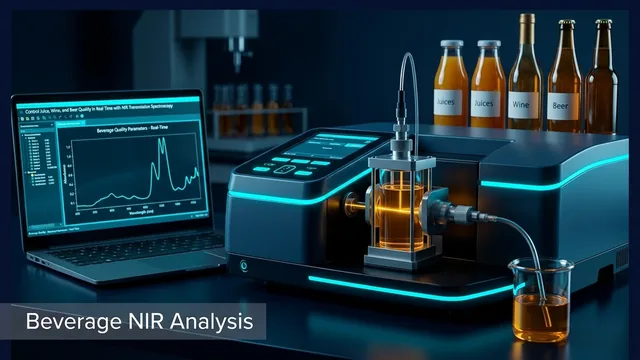 Read the article Control Juice, Wine, and Beer Quality in Real Time with NIR Transmission Spectroscopy How to control NIR transmission spectroscopy for real-time juice, wine, and beer quality measurement.
 -
 Read the article NIR Spectroscopy in Feed Mills, Meat and Dairy, and Baking Applications How NIR spectroscopy in feed, dairy, meat, and baking drives real-time quality control and prevents costly off-spec batches.
 -
 Read the article NIR Spectroscopy in Agriculture: Grain Receiving, Feed Mill Measurement, and AOAC Compliance NIR spectroscopy in grain receiving, feed mills, and AOAC compliance — where it adds value and how to act on the data.
 -
 Read the article Stop Losing NIR Accuracy in Sample Prep: A Grain and Feed Handler's Guide to Every Sample Type How grain and feed operations stop NIR prediction errors by fixing sample preparation across every sample type.
 -
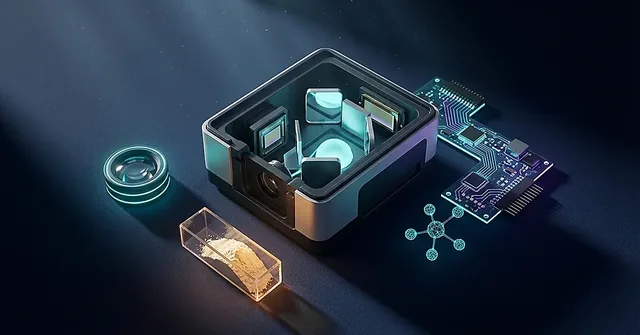 Read the article Decode NIR Readings: How Feed and Grain Labs Turn Light Into Quality Data How feed and grain labs decode grain quality data using NIR instrument components, calibration models, and chemometrics.
 -
 Read the article Reject or Accept in Seconds: How NIR Transforms Grain Receiving Decisions at the Intake Point How NIR in grain receiving works, what it measures, and why calibration maintenance determines real-world accuracy.
 -
 Read the article How NIR Spectroscopy Works: Physics, Chemometrics, and Instrument Design How NIR spectroscopy works: molecular physics, instrument design, and chemometrics explained for grain and feed QA.
 -
 Read the article NIR Spectroscopy: Where It Fits in Grain, Feed, and Food Operations Where NIR spectroscopy fits in grain, feed, and food operations — limitations, failure modes, and reference check protocols explained.
 -
 Read the article How to Know When NIR Outperforms Wet Chemistry in Feed and Grain Quality Testing A practical approach for deciding when NIR instead of wet chemistry is the right call — with volume thresholds, detection limits, and ROI guidance.
 -
 Read the article NIR Spectroscopy in Food and Feed: What It Measures and Where It Fails How NIR spectroscopy in food and feed works, what it reliably measures, and where calibration and matrix limits apply.
 -
 Read the article Why NIR Spectroscopy Needs Chemometrics: PLS, PCR, and Key Techniques Explained Why NIR spectroscopy needs chemometrics — PLS, PCR, preprocessing, and calibration quality explained for food and feed labs.
 -
 Read the article NIR Spectroscopy in Food & Feed QA: How It Works, What It Measures, and Where It Fails How NIR spectroscopy in food and feed QA works, what it measures, and where its real limits lie.
 -
 Read the article Measure Protein, Moisture, and Fat in Seconds: How NIR Reads Molecular Bonds in Your Grain and Feed How NIR bond vibrations let you measure moisture, protein, and fat in grain and feed in seconds.
 -
 Read the article NIR Light-Matter Interaction: Absorption, Overtones, and What's Inside the Instrument How NIR light-matter interaction drives absorption, overtones, and instrument design in food and feed analysis.
 -
 Read the article Advanced NIR Data Analysis: Methods Beyond Basic Chemometrics Advanced NIR chemometrics guide covering PLS, neural networks, SVMs, preprocessing, and calibration transfer for food and feed labs.
 -
 Read the article Cut Lab Wait Times From Hours to Minutes: How NIR Spectroscopy Pays for Itself in Feed and Grain Operations How NIR spectroscopy eliminates wet chemistry bottlenecks and delivers measurable ROI in feed and grain operations.
 -
 Read the article What Is NIR Spectroscopy? How Near-Infrared Light Works in Food and Feed Analysis How NIR spectroscopy works in food and feed labs — from light-molecule interaction to calibration and real-world results.
 -
 Read the article How Beer-Lambert Law Determines When Your NIR Results Are Reliable — and When They're Not The Beer-Lambert Law powers every NIR calibration — until it doesn't. Learn where it breaks down in food and feed analysis.
 -
 Read the article Validate Your NIR Calibration Against Real Grain Samples Before Your First Production Run Step-by-step guide to validate NIR calibration against real grain samples using RMSECV, RMSEP, and bias checks.
 -
 Read the article NIR Calibration: Why It's Essential and How It Works Why NIR calibration is needed, how models are built from spectra and reference data, and how to keep them accurate in production.
 -
 Read the article NIR Calibration Overfitting: Why It Happens and Three Validation Methods NIR calibration overfitting explained: warning signs, real-world benchmarks, and three validation methods for food and feed labs.
 -
 Read the article NIR Spectroscopy: How Near-Infrared Light Becomes a Usable Measurement How NIR spectroscopy converts near-infrared light into actionable quality measurements for grain, feed, and dairy operations.
 -
 Read the article NIR Instrument Selection for Grain, Feed, and Dairy Operations: Benchtop vs At-Line vs Inline Near-infrared analyzers come in a impressive variety of physical configurations, each improve for specific applications and workflows. A grain elevator's receiving pit requires very...
 -
 Read the article NIR Instrument Design: Light Sources, Wavelength Selection, and Core Components How NIR instrument design choices — light source, wavelength selector, and detector — determine measurement accuracy in grain and feed labs.
 -
 Read the article How NIR Spectroscopy Measures Oil, Protein, and Moisture in Oilseed Processing How NIR spectroscopy measures oil, protein, and moisture in oilseed processing with real-world accuracy benchmarks.
 -
 Read the article Measure Fat, Protein, and Moisture in Dairy Streams Instantly With Inline NIR How dairy operations use inline NIR to measure fat, protein, and moisture instantly — and what it takes to get it right.
 -
 Read the article How NIR Measures Feed Ingredients and Why Feed Mills Choose It Over Wet Chemistry How NIR measures feed ingredients, what it predicts reliably, and why feed mills prefer it over wet chemistry.