NIR Spectroscopy Applications: Where It Pays for Itself in Food and Feed
Discover the most valuable nir spectroscopy applications in food and feed — moisture, protein, fat, Brix, and adulteration screening with real cost data.
· 8 min read · Vitaly Kirkpatrick
NIR Spectroscopy Applications: What They Solve on a Production Floor
A tanker pulls up at 2am carrying 20,000 liters of milk powder. Your technician needs moisture before that batch moves to packaging. At 3.5% moisture, you're fine. At 5%, you're looking at caking, microbial risk, and a potential production shutdown. The reference lab method takes four hours. Your production schedule allows zero delays.
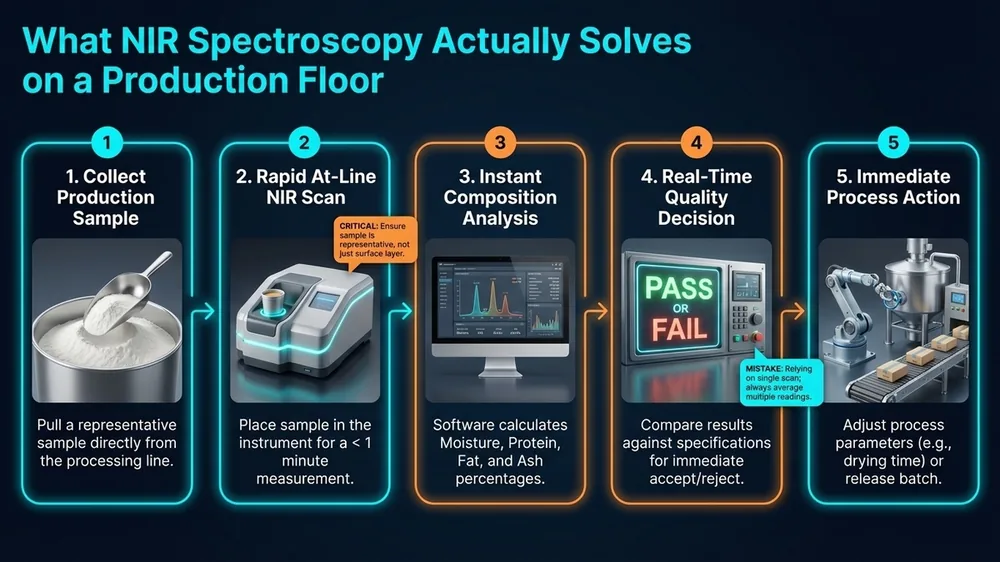
That's exactly the problem NIR spectroscopy was built to solve. Not as a novelty — as a production tool. One that gives you real answers in seconds, without destroying a single gram of product.
Quality managers often ask me: "Can this instrument really be trusted?" Yes — when the calibration is right and the deployment matches the application. That's what this article covers. Not the theory. The specific points in your operation where NIR pays for itself, with real numbers attached.
Hyperspectral NIR Imaging: When Your Batch Can't Wait
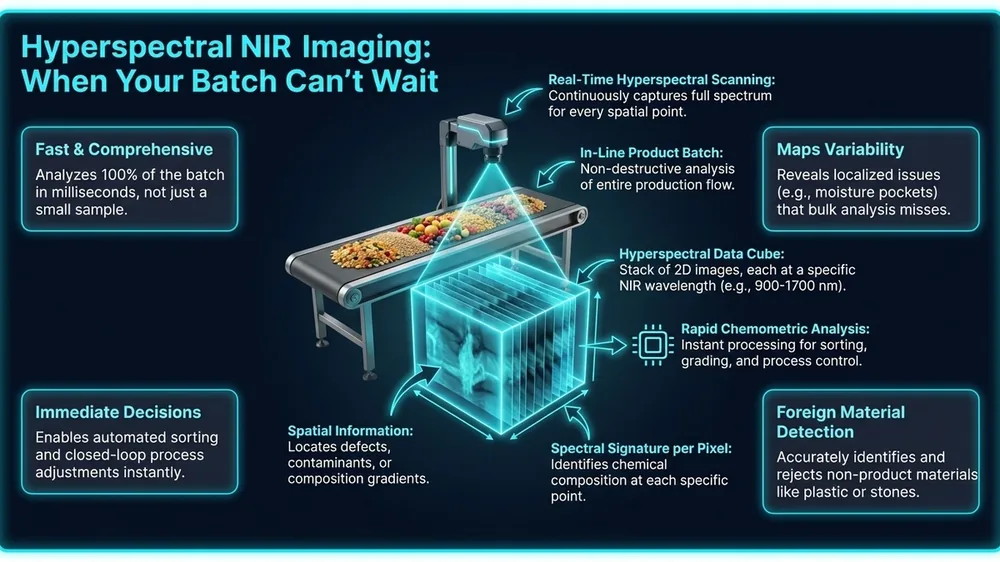
Standard NIR instruments measure a single point or a blended sample. Hyperspectral NIR imaging goes further — it captures spatial and spectral data across an entire surface at once, mapping chemical variation across a batch rather than averaging it away.
Think of the difference this way: a standard NIR measurement is like tasting one spoonful of soup to judge the whole pot. Hyperspectral imaging tastes every spoonful simultaneously and tells you exactly where the seasoning went wrong. When a batch contains pockets of high-moisture grain mixed with dry grain, a point measurement can pass while the imaging reveals the problem hiding underneath.
For oilseed processing and high-volume grain handling, that distinction has real consequences for storage stability and downstream processing. The cost of missing a localized moisture hotspot or contamination pocket far exceeds the cost of the imaging system. Instrument costs have dropped, and integration with existing line control systems is more straightforward than it was five years ago — which is why adoption has picked up.
How NIR Spectroscopy Works
NIR spectroscopy uses light to read a sample's chemical composition. Not X-rays. Not reagents. Light — specifically, wavelengths in the 780–2500 nm range that sit just beyond what human eyes can detect.
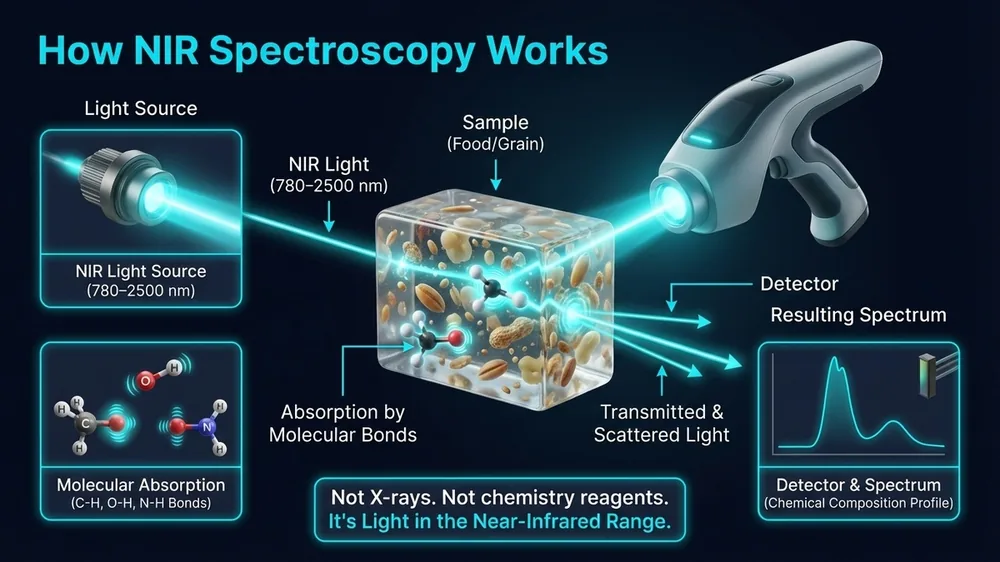
When NIR light hits a sample, specific molecular bonds absorb specific wavelengths. The bonds that matter most in food and feed — C-H, O-H, and N-H — absorb NIR energy in patterns unique to each compound. Measuring those absorption patterns across hundreds of wavelengths at once produces a chemical fingerprint of the sample.
It's similar to how you'd recognize a regular customer not by one feature alone, but by their voice, their walk, and how they carry themselves together. That combination is specific enough to identify them even in a crowd. NIR works the same way — multiple signals read simultaneously, specific enough to quantify compounds even in complex matrices like grain, meat, or dairy.
For a deeper look at the physics behind these molecular interactions, the SpectroScience article on why molecules vibrate and how NIR uses that to predict composition gives a solid foundation. If you want a concise overview of measurement principles, calibration metrics, and reference method comparisons, the NIR spectroscopy review covering measurement, calibration metrics, and reference methods is a useful companion.
NIR measures multiple molecular absorption signals simultaneously across hundreds of wavelengths. The result is a chemical fingerprint that quantifies moisture, protein, fat, sugar, and fiber in 15 to 30 seconds — non-destructively, with no sample prep in many cases.
Your lab doesn't stop. Your line doesn't stop.
Where NIR Pays for Itself: Real Applications, Real Numbers
Moisture: The Number That Runs Your Operation
Moisture looks simple on paper. It causes real chaos when it's off. In grain handling, a 1% moisture error on 50,000 tons of annual throughput can mean tens of thousands of dollars in overpayment or product loss. In snack food manufacturing, a 0.5% moisture variation changes texture, shelf life, and customer return rates.
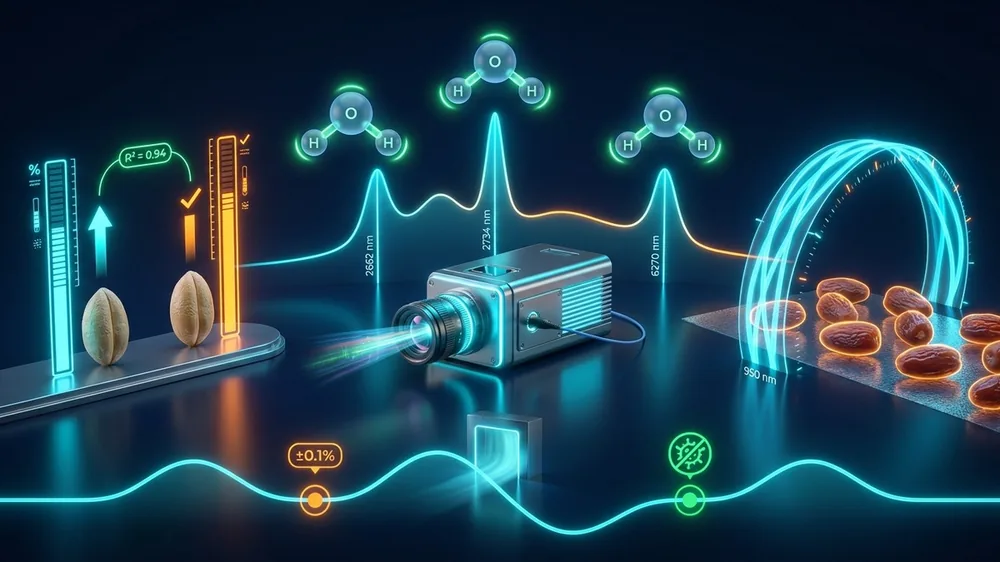
Traditional oven drying takes 4 to 24 hours depending on the matrix. NIR gives you the same number — validated against the reference method — in under a minute.
On a busy intake line, that's not a convenience. That's the difference between clearing a truck and holding up an entire receiving queue.
Quality managers in animal feed milling aren't always focused on the technical details of NIR. Their priority is keeping the line running while ensuring the feed meets nutrient specifications. NIR moisture and protein measurement deliver both. At grain receiving specifically, the speed advantage compounds across hundreds of truckloads per season — each one requiring a decision that can't wait for a lab result. The SpectroScience article on NIR in grain receiving operations walks through that workflow in detail.
Protein and Fat: Where Giveaway Costs Real Money
Equipment brochures don't always state this clearly: the ROI on NIR protein measurement isn't about the instrument cost. It's about what you're giving away without it.
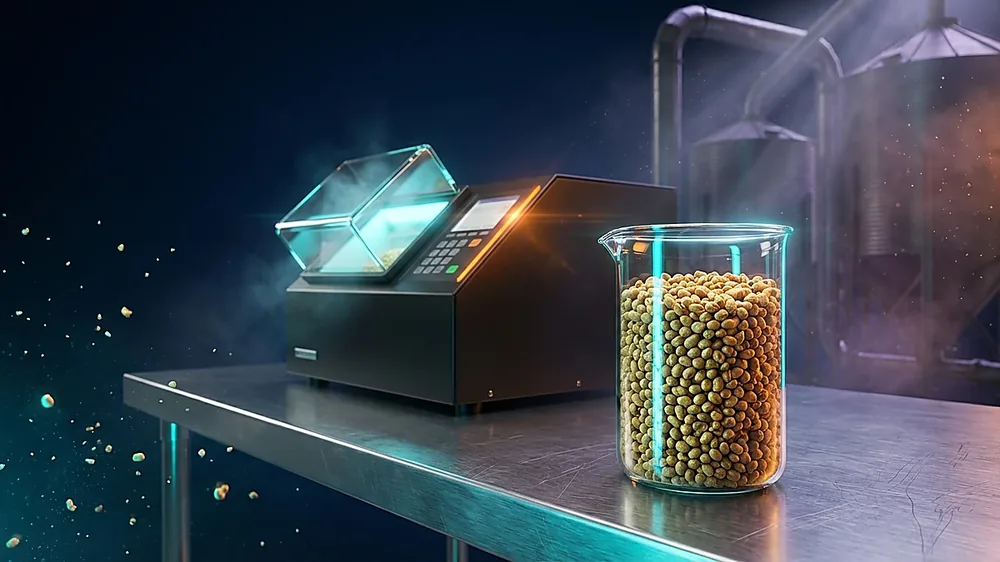
A mid-size feed mill formulating to a 16% crude protein spec — without accurate real-time protein measurement — will often overshoot by 0.3 to 0.5% just to stay safe. At current soybean meal prices, that's easily $120,000 to $180,000 per year in unnecessary protein giveaway.
When I work with clients at feed mills, this is the pattern I see: the NIR instrument pays for itself before the first annual calibration update. The giveaway savings alone cover the hardware, the calibration work, and the training. Everything after that is margin.
In dairy, incoming milk fat variability directly affects standardization. A plant receiving 200,000 liters per day — with fat content varying by 0.2% and no rapid measurement at intake — is either giving product away or risking non-compliance. NIR at the intake point resolves that. The SpectroScience article on NIR in dairy processing and real-time inline monitoring covers how dairy processors deploy NIR for fat and protein monitoring in detail.
The same applies to meat processors verifying lean-to-fat ratios in ground beef before it goes into a blended product. The measurement takes seconds. The cost of getting it wrong doesn't.
In oilseed processing, fat measurement is central to extraction efficiency. A crusher running on hourly lab pulls for oil content in meal is managing extraction by looking backward. Inline or at-line NIR shifts that to real-time, allowing process adjustments before product loss accumulates. On a facility processing 500 tons of soybeans per day, even a 0.1% improvement in residual oil recovery in meal translates to large annual value.
Sugar and Brix: Timing Is Everything
A fruit grower who's called harvest too early — or too late — knows exactly what Brix variation costs. The answer involves rejected loads and renegotiated contracts.

NIR handheld devices now allow growers to measure soluble sugar content in fruit directly in the field, non-destructively. The same apple can go back on the tree if it isn't ready. Beverage manufacturers use inline NIR to verify sweetness consistency batch to batch — not from a lab sample pulled every two hours, but continuously, in real time.
When your customer spec says 12.0 ± 0.3° Brix and your process control relies on hourly grab samples, you're flying partially blind. NIR closes that gap.
Sugar measurement via NIR is also well-established in confectionery and baking applications, where dissolved solids content directly affects cook temperatures, texture development, and finished product moisture. Process engineers who've dealt with a batch of hard candy that set too soft — or a bread dough that fermented inconsistently — understand exactly what tighter sugar control delivers in practice.
Feed Mill Applications: Consistency Across Every Ingredient
Feed mills handle dozens of raw ingredients simultaneously, each with variable composition depending on origin, crop year, and supplier. A corn shipment from one supplier may run 8.5% protein. The next shipment, same spec sheet, comes in at 7.8%. Without measurement at intake, that variation flows directly into your finished feed formulation.
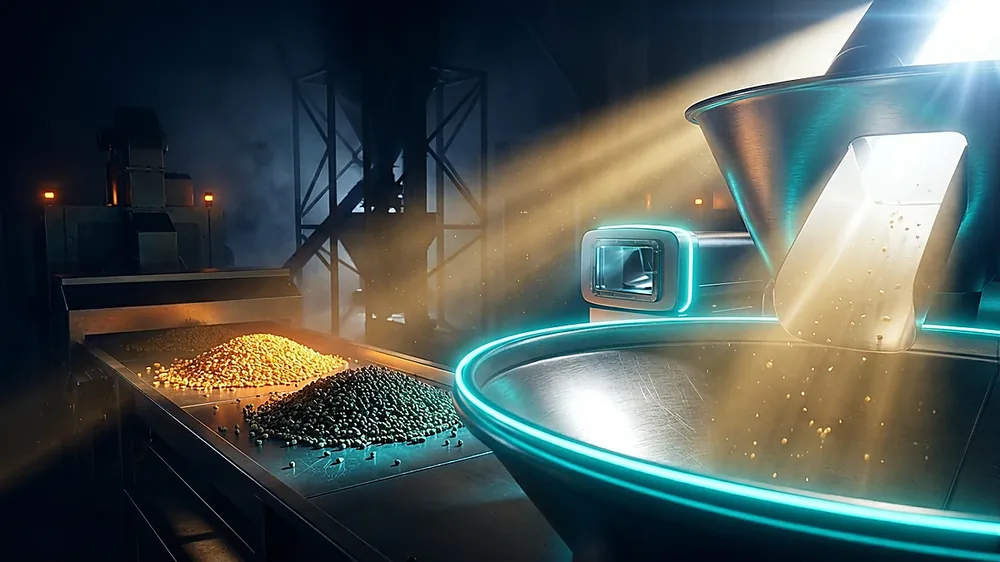
NIR at the intake scale catches that shift immediately. The nutritionist adjusts the formulation before the batch is mixed, not after a finished product test fails. That's the core value for feed mill NIR applications — not just measurement speed, but the ability to reformulate proactively instead of reactively.
Ingredient-by-ingredient NIR measurement also supports least-cost formulation software. When the actual nutrient values of incoming ingredients are known rather than assumed from book values, the formulation optimizer makes better substitution decisions — often reducing ingredient costs by 1 to 3% without sacrificing nutritional compliance. For feed operations comparing NIR to wet chemistry on a workflow and cost basis, the SpectroScience article on how NIR measures feed ingredients and why mills choose it over wet chemistry lays out the practical comparison.
Adulteration Detection: The Test Nobody Wants to Need
Here's a scenario quality teams raise more than once: a shipment of olive oil arrives. The paperwork says extra virgin. Your sensory panel isn't available until tomorrow. How confident are you?
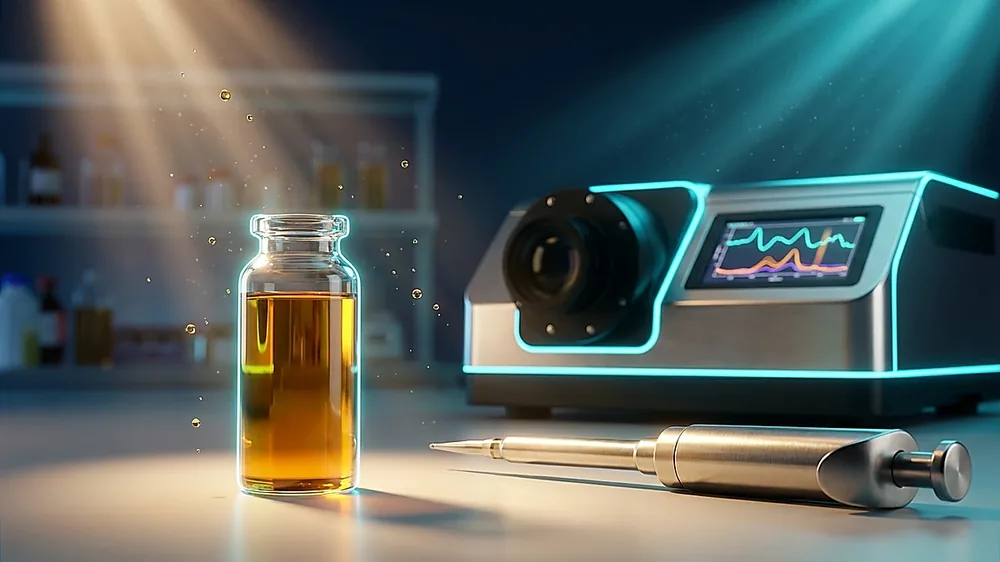
NIR can't replace every adulteration test — that should be stated clearly. But it flags anomalies fast. A sample whose NIR spectrum doesn't match the established library of genuine material stands out immediately. No waiting. No guessing.
Combined with other analytical tools, NIR becomes the first-pass screening layer. It catches obvious problems before they reach your production floor or your customer.
The same logic applies to honey dilution, spice adulteration, and milk powder substitution — all documented NIR applications where screening has caught problems that visual inspection missed entirely. The practical requirement is a well-built spectral library, one that includes verified authentic samples from multiple suppliers, crop years, and processing conditions. Don't build it reactively after a suspect shipment has already arrived. Build it proactively, as a standard part of your incoming QC program. A reactive library built under pressure is far less reliable than one assembled deliberately over time.
Field tip: Build the NIR spectral library from verified authentic samples across multiple suppliers and crop years — before it is needed for adulteration screening. A library built reactively after a suspect shipment arrives is far less reliable than one built proactively as part of incoming QC.
Inline and At-Line NIR: Closing the Loop on Process Control
At-line NIR — where a sample is pulled and measured adjacent to the process — is the most common deployment in food and feed facilities. It's fast, operator-friendly, and delivers results in time to influence the next production decision. But inline NIR, where the instrument measures product as it flows through the process, takes that value further.
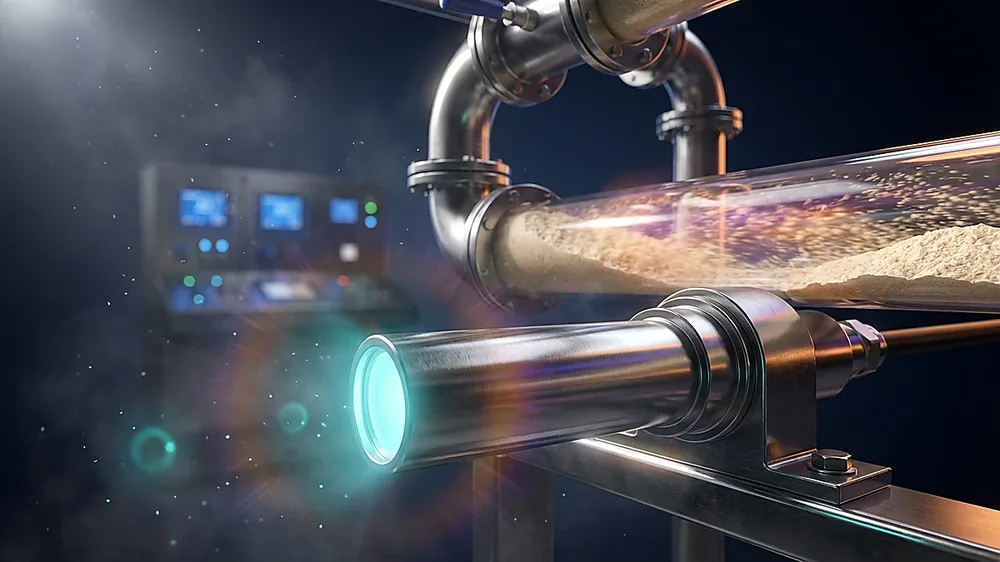
An inline NIR probe installed in a flour blending system can monitor protein content continuously throughout a blend run. If the blend drifts out of spec — due to incoming ingredient variability, equipment wear, or a change in ingredient ratios — the system flags it immediately. The batch is corrected in real time rather than discovered in a finished product audit. And that's expensive to catch late.
This is relevant wherever process uniformity directly affects product quality: fat standardization in dairy, moisture control in dried ingredients, protein consistency in nutritional powders, moisture monitoring in extruded feeds. The instrument types suited to inline deployment differ from benchtop analyzers — process probes, fiber-optic interfaces, and purpose-built flow cells are designed for continuous operation in production environments. For a structured comparison of deployment formats, the SpectroScience overview of different types of NIR instruments from benchtop to process covers the key differences and selection criteria.
Building the Business Case for NIR Investment
The decision to invest in NIR isn't primarily a technical decision. It's a financial one. QA managers and plant managers who've approved NIR purchases did so because the numbers worked — not because the technology was interesting.
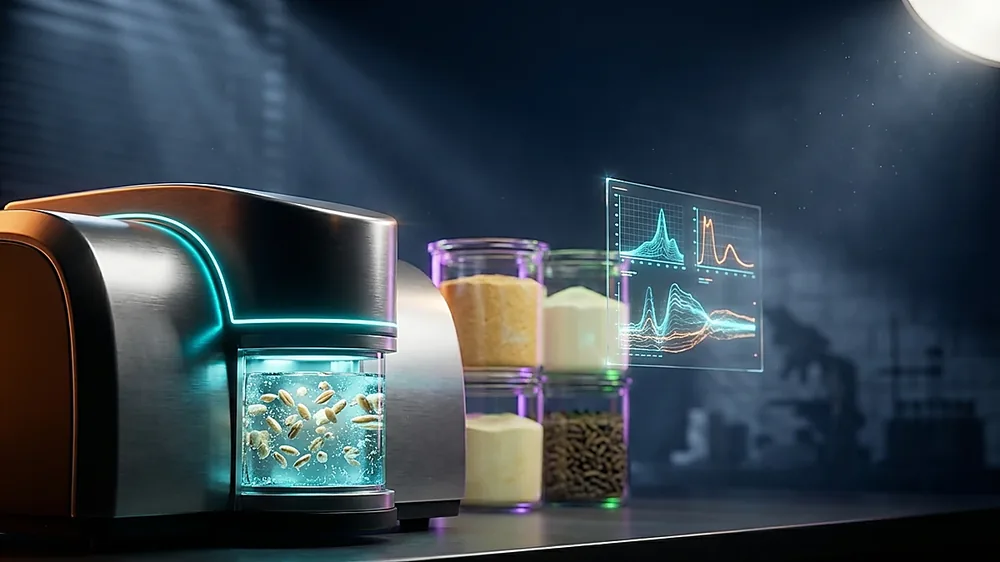
The standard calculation involves four cost categories: ingredient giveaway, lab reagent and labor costs, production delays caused by waiting for results, and the cost of non-conforming product reaching the customer or triggering a hold. In most food and feed operations with meaningful throughput, at least one of those categories is large enough to justify a benchtop NIR system within the first year.
A 200-ton-per-day feed mill with a single protein giveaway problem — as described earlier — can justify a $35,000 to $60,000 NIR system in under six months on that calculation alone, without counting lab labor savings or reduced hold frequency. Grain receiving operations with high seasonal throughput often achieve payback in a single season. The SpectroScience article on how to calculate NIR spectroscopy ROI walks through the methodology with worked examples.
The mistake I see operators make is treating NIR as a lab upgrade rather than a production tool. The value isn't in replacing wet chemistry across the board — it's in putting actionable quality data at the point in your process where decisions are made, at the speed those decisions actually require. That's the distinction that separates operations where NIR earns its keep from operations where it sits on a bench and gets used twice a week.
Free tool — NIR ROI Calculator: Plug your sample volume, current method cost, and analyte spec into the SpectroScience NIR ROI Calculator to see annual savings and payback period for your operation. Open the ROI Calculator →
SpectroScience students get access to the NIR Troubleshooting Guide — systematic approach to diagnosing poor predictions, instrument drift, and calibration failures. Available as a free download in the student resource library.
Access the PDF libraryNIR Fundamentals Course — Lesson 14: Food & Feed Industry
This lesson focuses on the specific applications of NIR spectroscopy in the food and feed industry, detailing how it can streamline quality control processes. It emphasizes the practical benefits of using NIR technology to achieve faster and more accurate assessments, ultimately leading to improved production efficiency and reduced risks.
Explore Lesson 14 in the NIR Fundamentals courseWant to Master NIR Spectroscopy?
Our 32-lesson online course covers everything from Beer-Lambert Law to PLS calibration — built for food, grain, feed, and dairy professionals.