How NIR Measures Feed Ingredients and Why Feed Mills Choose It Over Wet Chemistry
Learn how NIR measures feed ingredients for protein, moisture, fat, and fiber — and why feed mills choose it over wet chemistry for speed and cost.
· 6 min read · Vitaly Kirkpatrick
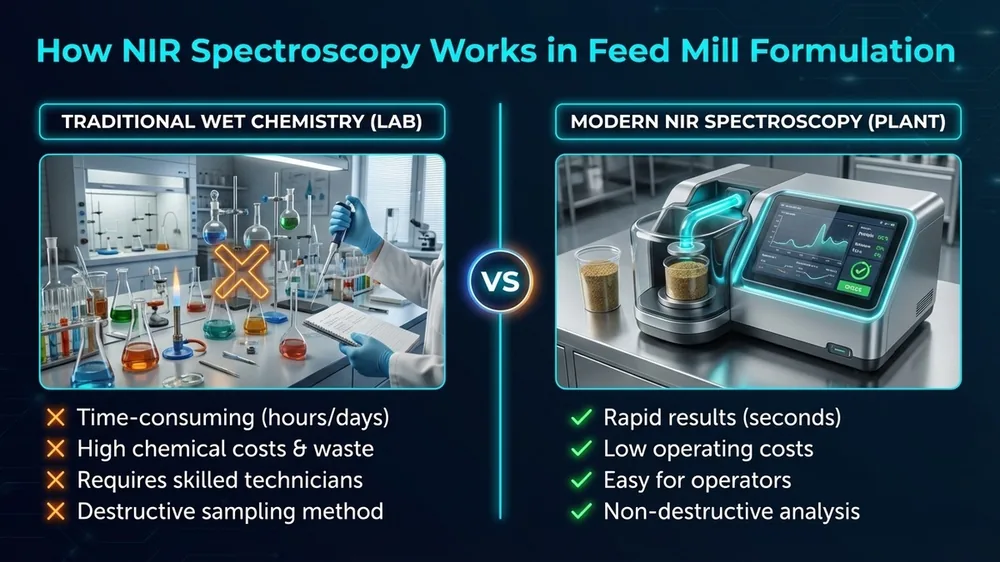
How NIR Spectroscopy Works in Feed Mill Formulation
A truck pulls up with a load of soybean meal. You've got 20 more behind it. Your Kjeldahl is already running a batch from two hours ago, and your lab tech is asking whether to start unloading. That's the moment NIR was built for — 30 seconds and you have a protein number. With wet chemistry, you're waiting 4 to 8 hours. At a high-throughput mill receiving 20 loads a day, that wait isn't a minor inconvenience. It's a production bottleneck. This article explains what NIR is actually doing when it reads a feed ingredient, what it does well, where it has real limits, and why it's become the default quality tool at ingredient intake across the grain and feed industry.
How NIR Light Reads Feed Ingredients
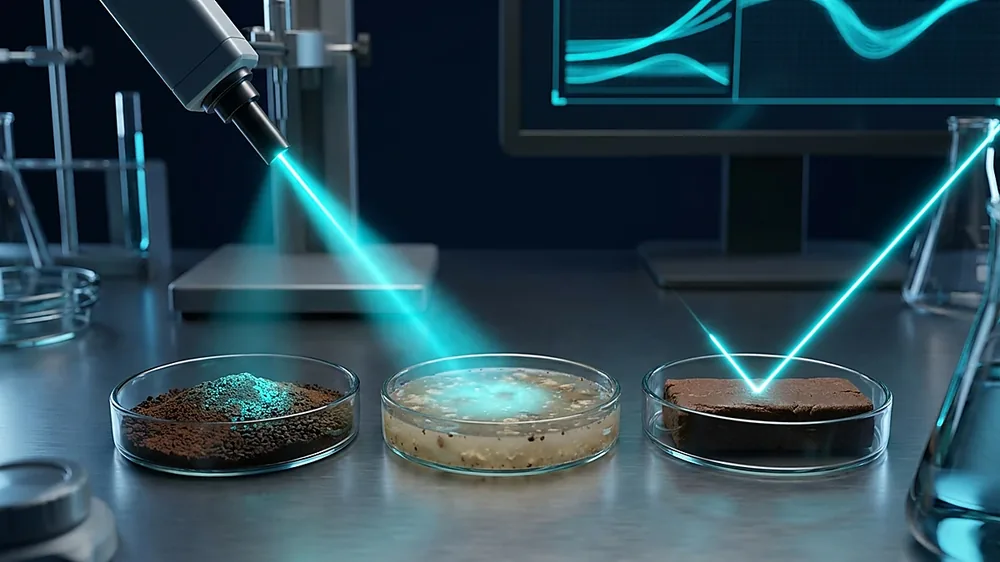
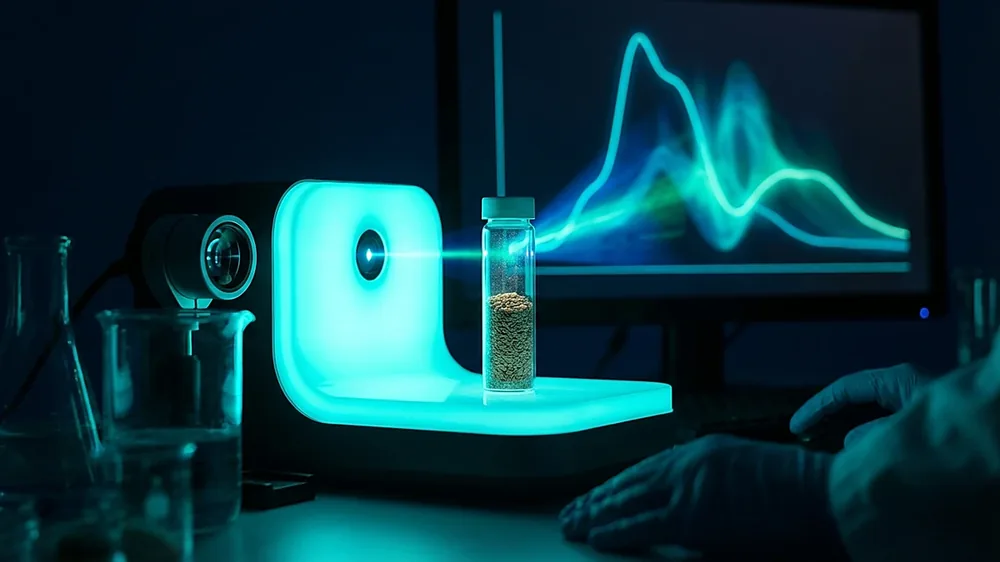
When NIR light hits a sample — corn distillers grain, soybean meal, wheat middlings — part of it gets absorbed and part gets reflected. What gets absorbed depends on the chemical bonds in that material: C-H, O-H, and N-H bonds specifically. Each of those bonds absorbs at characteristic wavelengths, producing a spectral fingerprint unique to that sample's composition.
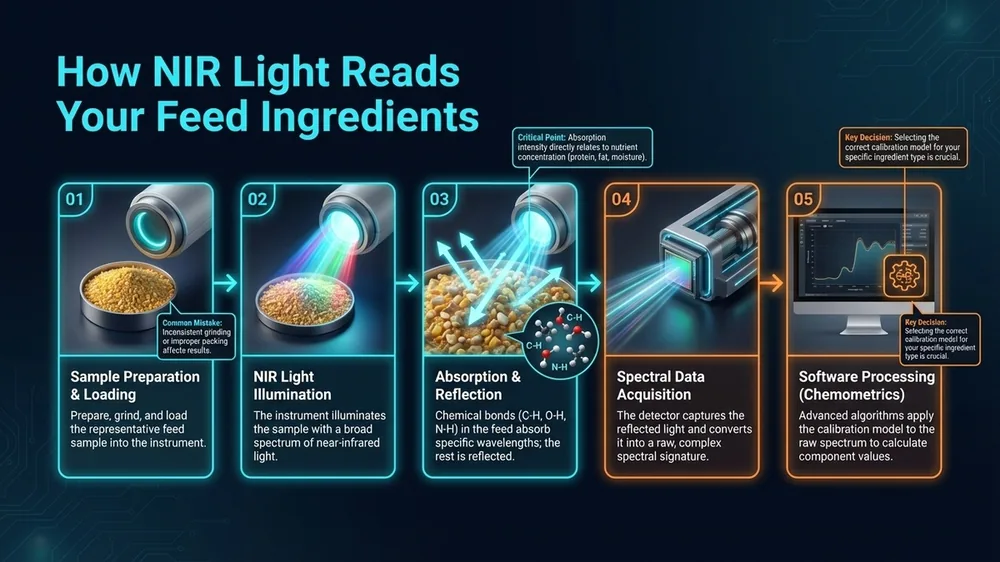
That fingerprint carries information about protein, moisture, fat, and fiber — the parameters that drive your formulation decisions. But here's what a lot of new NIR users don't realize: the instrument doesn't read those numbers directly from the light. It measures the spectrum, and a calibration model translates that pattern into predicted values. That distinction matters — a lot — and it's why calibration quality is what you should be asking about before you trust any NIR result.
For a deeper look at the molecular physics behind this process — including why overtone absorptions make NIR so useful for organic compounds — SpectroScience's article on why molecules vibrate and how NIR uses that to predict composition provides a thorough foundation.
Note: NIR doesn't directly measure composition — it measures a spectral fingerprint that a calibration model interprets. The quality of that model determines the quality of results.
In practice, most NIR work in a feed mill is straightforward: drop a sample into the cup and press start. No reagents, no digestion, no waiting for a Kjeldahl to finish. For incoming ingredient inspection — corn, soybean meal, DDGS, wheat middlings — that matters every time a truck pulls up.
The Physics Behind NIR Feed Ingredient Analysis
NIR operates in the wavelength range of approximately 780 to 2500 nanometers. Within that range, organic molecules produce overtone and combination band absorptions — weaker signals than the basic mid-infrared absorptions, but strong enough to be measured with precision instruments and interpreted through multivariate calibration. The practical implication: NIR can simultaneously predict multiple parameters from a single scan of the same sample, with no chemical treatment required.
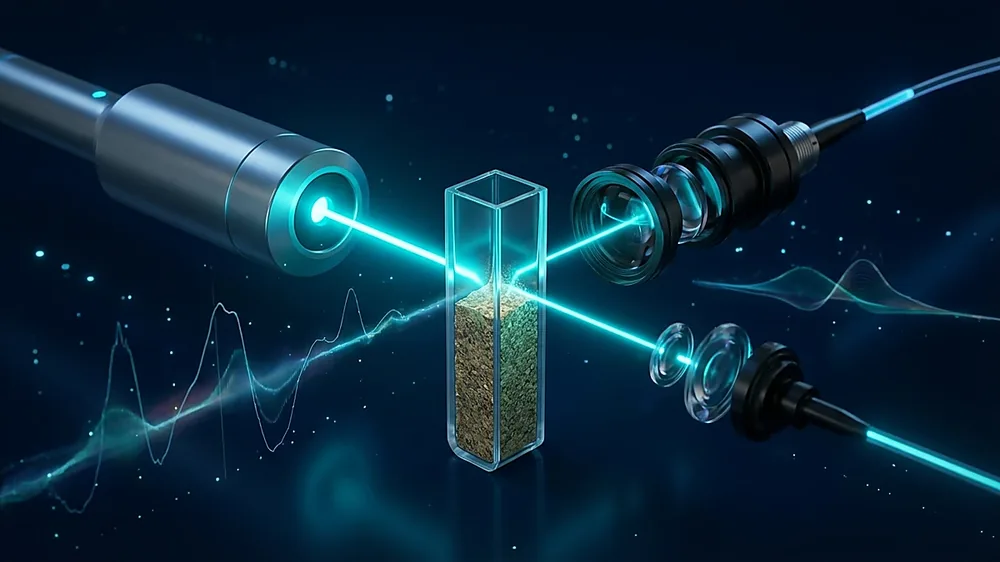
Think of it this way: a single NIR spectrum is like a voiceprint for that sample. No single wavelength tells you everything, but the full pattern across hundreds or thousands of wavelength points encodes protein, moisture, fat, and fiber all at once. When a soybean meal sample sits in the instrument, the reflected or transmitted spectrum captures that full-spectrum response — and the calibration model reads the pattern. For operations that want to understand what's happening inside the box before they trust it with production decisions, SpectroScience's article on how NIR instruments work and what their key components do explains the hardware side in practical terms.
One aspect of NIR physics that matters operationally is particle size sensitivity. Finely ground samples scatter light differently than coarsely ground ones, and that scattering affects the spectrum. This isn't just a procedural recommendation — it's a direct input to measurement accuracy. A corn sample run at one particle size and then rerun after coarser milling can produce different spectral baselines that push predictions off-target if your calibration wasn't built on that particle size range. Inconsistent grinding is one of the most common causes of unexplained NIR variability I see when visiting feed mill labs.
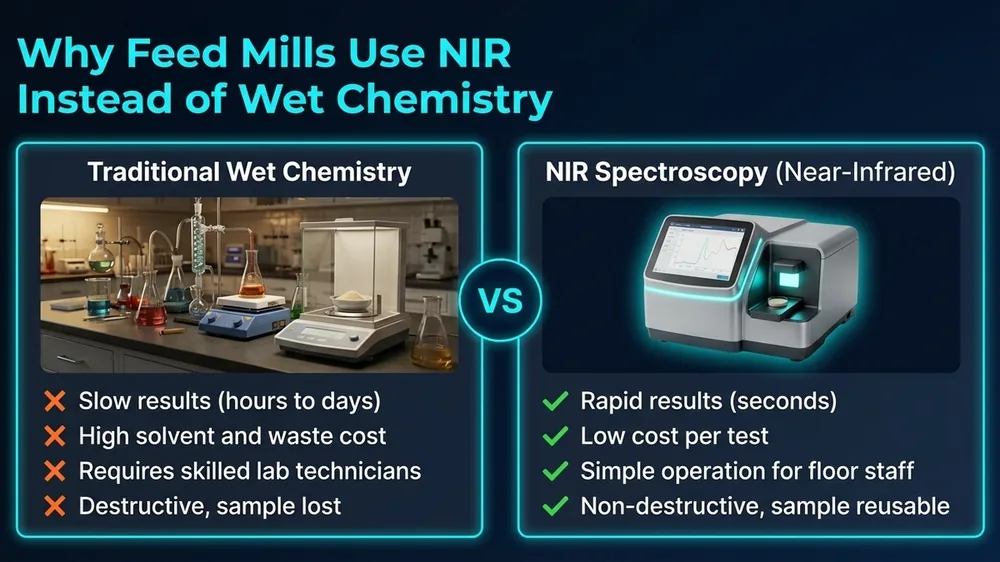
Why Feed Mills Use NIR Instead of Wet Chemistry
The practical case for NIR in feed formulation comes down to a few factors that make a real difference on the floor.
Speed and Throughput
A typical NIR scan takes 15 to 30 seconds. Wet chemistry for protein via Kjeldahl typically takes 4–8 hours. For a high-throughput mill receiving 20 loads a day, trucks can't be held for wet chemistry results. NIR allows a decision to be made before the unloading line backs up — and before your receiving supervisor starts making calls.
No Sample Destruction
The sample stays intact after analysis. You can run it on NIR, then send it to a reference lab if verification is needed. In a grain elevator where custody transfer disputes come up, that matters. A 50-gram sub-sample taken at the probe can yield a NIR result in under a minute and still be preserved for confirmatory wet chemistry if the result is outside specification.
This non-destructive characteristic also supports traceability workflows. When a load of canola meal comes in with a borderline protein reading, the intact sample can be retained, split, and sent to an accredited reference laboratory without any concern that the NIR analysis consumed the evidence. Wet chemistry simply can't offer that for the same sample.
Minimal Sample Prep
Most feed ingredients go straight into the NIR cup — no grinding, no extraction, no reagents. Some coarser materials may need a quick grind, but that still takes minutes, not hours. That's a meaningful difference when your lab is handling dozens of samples per shift. For high-moisture ingredients like wet distillers grain or fresh forages, drying and grinding are typically required, but the overall workflow still runs faster than traditional wet chemistry for the same parameters.
Lower Per-Sample Cost
Once a calibration model and instrument are in place, the cost per analysis drops sharply. No reagent consumables, no hazardous chemical disposal. Feed mills have reported cutting their QC lab chemical spend by more than half after moving routine analysis to NIR. When technician time, reagent cost, and disposal fees are all factored in, many operations find the per-sample cost of NIR running at 10–20% of what the equivalent wet chemistry panel costs.
Field tip: When building a business case for NIR, track current reagent and disposal costs per sample alongside technician time. The cost-per-analysis drop after switching to NIR is usually larger than management expects. For a structured approach to building that case, see SpectroScience's guide on how to calculate NIR spectroscopy ROI.
Operator Safety and Simplicity
Kjeldahl digestion and ether extraction for fat involve concentrated sulfuric acid and flammable solvents. Removing those from routine daily analysis reduces hazard exposure and simplifies lab safety compliance. For feed mills running two or three shifts, this is a practical benefit that often goes unquantified in ROI calculations but carries real weight with safety managers.
Training time also drops a lot. A technician can be taught to run NIR samples reliably in a single shift. Running Kjeldahl protein analysis correctly takes days of supervised practice before results can be trusted. In operations with high technician turnover, that training efficiency difference compounds into a meaningful operational advantage over the course of a year.
What NIR Measures in Feed Formulation
The parameters your lab tracks day-to-day depend on the ingredient mix. For most feed mills, the core list includes moisture, crude protein, crude fat, crude fiber, and ash. In poultry or swine operations, digestible amino acids — especially lysine — are also tracked. NIR models for amino acids have become a lot more reliable over the last decade, with well-maintained calibrations now achieving SEP values within 0.05–0.10% on soybean meal and canola meal.
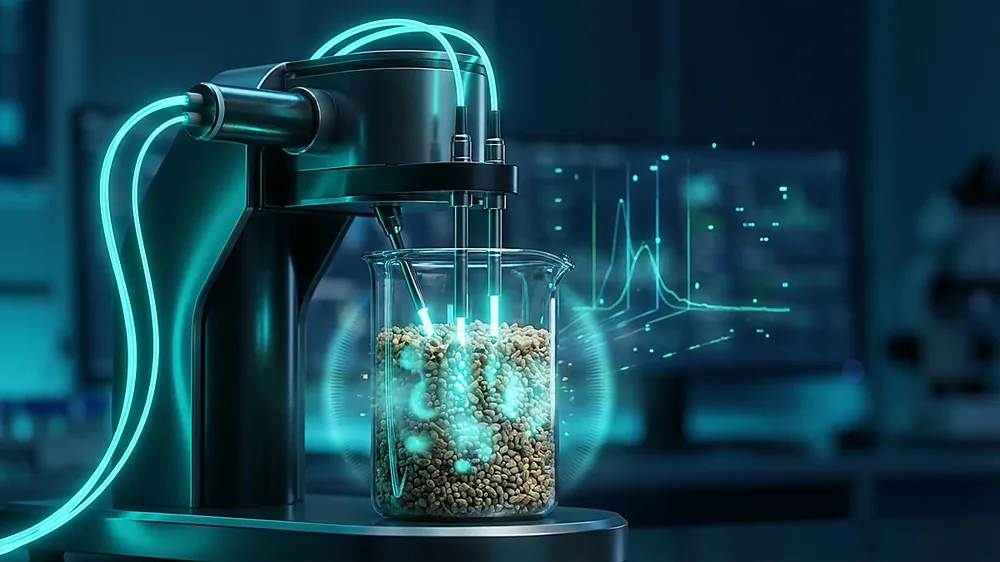
For pet food lines, many mills track not just macronutrients but also starch and sugar levels. For ruminant feed, NDF and ADF are common targets. A single NIR instrument can replace a range of wet chemistry methods across your full ingredient portfolio — and that's the real efficiency gain most operations underestimate when they're first evaluating the technology.
There are, however, parameters where NIR has genuine limitations. Trace minerals, heavy metals, and mycotoxins at very low concentrations are examples where wet chemistry or dedicated immunoassay methods remain necessary. For a complete breakdown of what NIR handles well and where it requires supplementary methods, SpectroScience's overview of what NIR measures and where it fails in food and feed covers the boundary conditions in detail.
Accuracy Benchmarks for Common Feed Ingredients
Quality managers often ask me how accurate NIR predictions actually are for their specific ingredients. The honest answer depends on calibration quality, sample presentation, and the natural variability in that ingredient — but published benchmarks give you a useful starting point for setting expectations before you commit to a program.
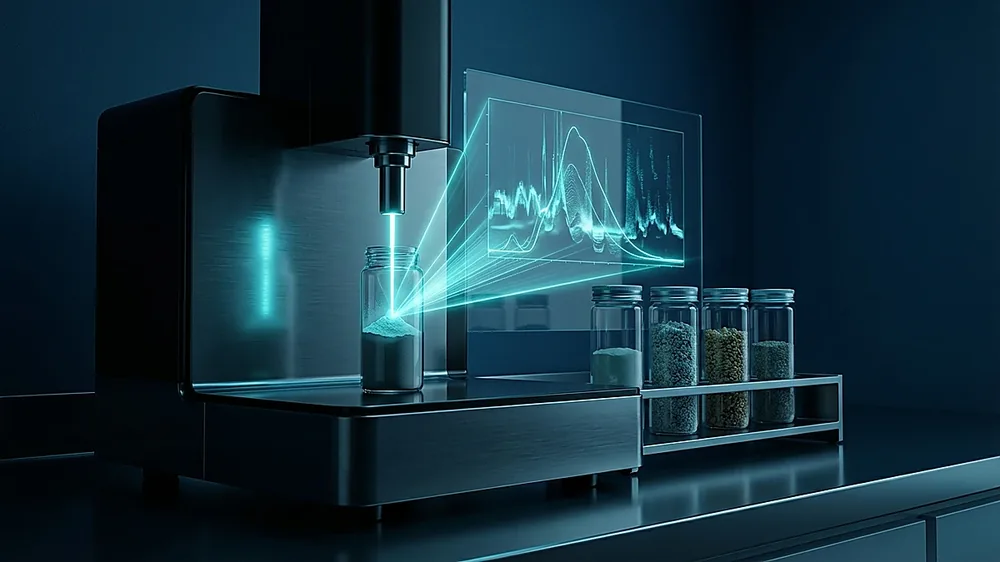
For soybean meal protein, well-built NIR calibrations typically achieve a standard error of prediction (SEP) in the range of 0.2–0.4% crude protein on a dry matter basis. For corn moisture, SEP values below 0.2% are achievable with good sample handling. Crude fat on DDGS typically runs at SEP of 0.3–0.6% depending on variability in the calibration set. These aren't theoretical numbers — they represent what mills running disciplined reference programs consistently report in their ongoing performance monitoring.
Where accuracy falls short of these benchmarks, the cause is almost always one of three things: calibration data that doesn't represent current ingredient variability, inconsistent sample preparation, or an instrument in need of maintenance. Chasing accuracy problems in NIR without checking these three factors first is a common mistake that delays resolution and erodes confidence in the instrument. For a structured diagnostic approach when predictions start drifting, SpectroScience's article on diagnosing NIR calibration problems walks through the evaluation process step by step.
Feed Ingredients That NIR Handles Reliably
NIR performs most consistently on ingredients with well-defined composition ranges and stable particle structure. The following categories represent where NIR earns its keep in a typical compound feed operation:
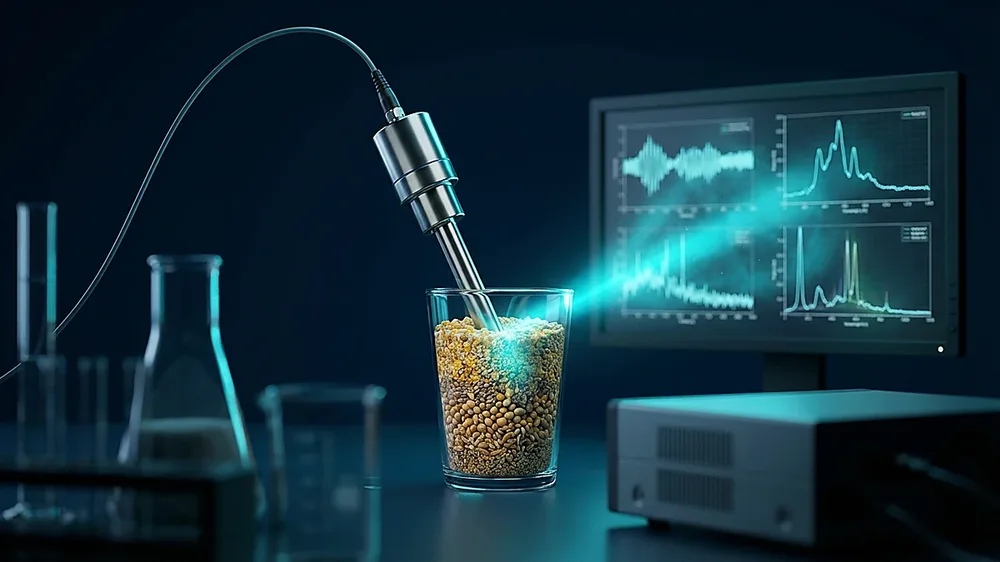
- Soybean meal: Protein, moisture, fat, and fiber predictions are well-established. Calibrations are widely available from instrument vendors and industry databases. SEP for protein on SBM routinely falls below 0.3%.
- Corn and small grains: Moisture, protein, and starch are straightforward. Corn also supports fat and fiber measurements with good reliability. This is the most common NIR application at grain intake.
- DDGS and distillers products: Variable composition makes this a more challenging calibration target, but well-built models covering the full variability range perform reliably. Moisture and protein are the priority parameters here.
- Canola and sunflower meal: Oil and protein are primary targets. Glucosinolate content in canola can be tracked with NIR, though model performance varies by calibration quality.
- Wheat middlings and bran: Fiber fractions, protein, and moisture. Particle size consistency matters here — a quick grind before analysis improves repeatability.
- Fishmeal: Protein and moisture are well-supported. Histamine can't be measured by NIR and requires dedicated analytical methods.
In each of these cases, consistent sample presentation — fill level, particle size uniformity, temperature equilibration — is what separates reliable results from noisy ones. Your instrument can only work with what you give it.
Ingredients and Parameters Where NIR Has Limits
Not every feed ingredient or quality parameter is a good fit for NIR, and understanding those limits prevents the kind of overconfidence that leads to formulation errors. Wet distillers grains with high and variable moisture content are a challenging NIR target — predictions for dry matter basis composition require accurate moisture correction, and when moisture varies widely within a load, within-load variation can push individual predictions outside acceptable tolerance.
Similarly, ingredients where the analytical target is present at trace levels — mycotoxin-contaminated corn screenings, for example — sit outside what NIR can reliably address. Mycotoxin screening requires dedicated lateral flow assays, ELISA, or HPLC methods. NIR isn't a mycotoxin detector, and using it as one based on indirect spectral signals from damaged kernels introduces unacceptable risk into a food safety program. That's not a gray area.
Physical parameters like pellet hardness and bulk density can sometimes be predicted with NIR, but these applications need purpose-built calibrations and careful validation before operational use. The safeguard is always the same: if a calibration's SEP isn't within a range that makes the result actionable, that parameter should stay with its reference method until the calibration quality improves.
NIR Calibration: The Step That Determines Accuracy
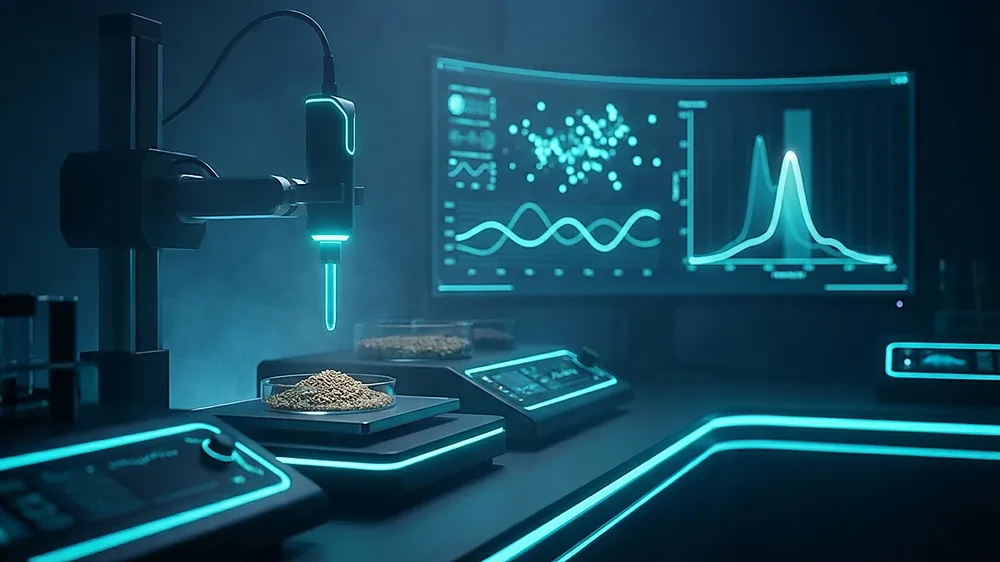
Your NIR results are only as reliable as the calibration model behind them. A calibration is built using reference samples analyzed by wet chemistry, paired with their NIR spectra. The model learns to link spectral patterns to known values. When that reference dataset covers the natural variation in your ingredients — seasonal shifts, supplier differences, processing changes — the predictions stay accurate. When it doesn't, results drift. And that drift is usually slow enough that you don't catch it until something's already wrong.
This is why calibration maintenance isn't optional. Mills that treat it as a one-time setup task are the ones that report NIR failures six months later. Mills that build ongoing reference programs — adding 20–30 new reference samples per ingredient per year — consistently report reliable, actionable results year after year. A useful rule of thumb: if a new supplier is added or a processing change occurs at a key supplier facility, that ingredient should go back through wet chemistry verification before NIR predictions are trusted again.
Key point: A well-maintained calibration is what separates a NIR instrument that drives decisions from one that sits in the corner. Budget for reference samples from day one.
For operations just getting started with NIR calibration, understanding the difference between validation statistics like SECV and SEP is needed before drawing conclusions about model performance. SpectroScience's article on NIR measurement, calibration metrics, and reference methods explains how to interpret these numbers and what thresholds to target for common feed ingredients.
Where NIR Fits in the Feed Mill Workflow
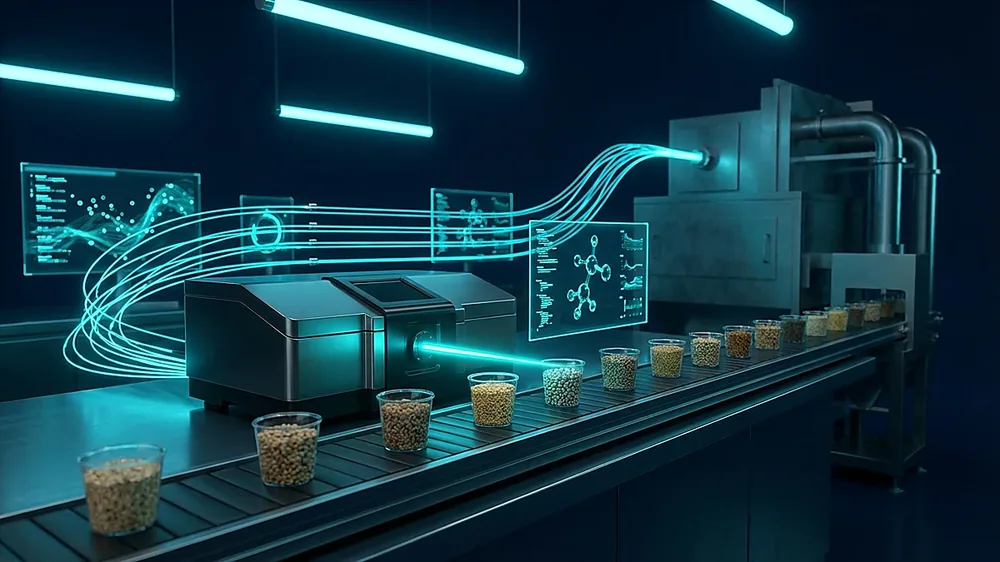
Most feed mills deploy NIR at three distinct points. The first is ingredient intake — the highest-value application, where results directly affect purchasing decisions and acceptance or rejection of loads. The second is pre-mix verification, where formulated batches are checked before they go into production. The third is finished feed QC, where the final product is confirmed against label specifications.
Each deployment point has different requirements. Intake scanning prioritizes speed and breadth — multiple ingredients, high sample volume. Pre-mix and finished feed scanning often require tighter accuracy thresholds and more frequent calibration checks because the stakes of a label non-compliance are higher. Some larger operations run separate calibration sets for each stage rather than relying on a single shared model. That's not overengineering — it's the right call when your finished feed protein spec has a tolerance of ±0.5%.
At all three points, the instrument is only as useful as the procedures around it. Sample handling protocols, instrument warm-up routines, and regular performance checks with check samples are what turn hardware into reliable data. These operational details are where many feed mills underinvest, and where performance gaps appear over time.
Choosing the Right NIR Instrument for Feed Applications
The instrument decision shapes what's operationally possible for your lab. For high-volume intake labs processing dozens of samples per shift, a benchtop scanning monochromator or FT-NIR instrument offers the full-spectrum capability needed to support broad calibrations across many ingredient types. For smaller operations or satellite locations where budget is the constraint, filter-based instruments offer a lower entry cost but limit the number of parameters and ingredient types that can be predicted.
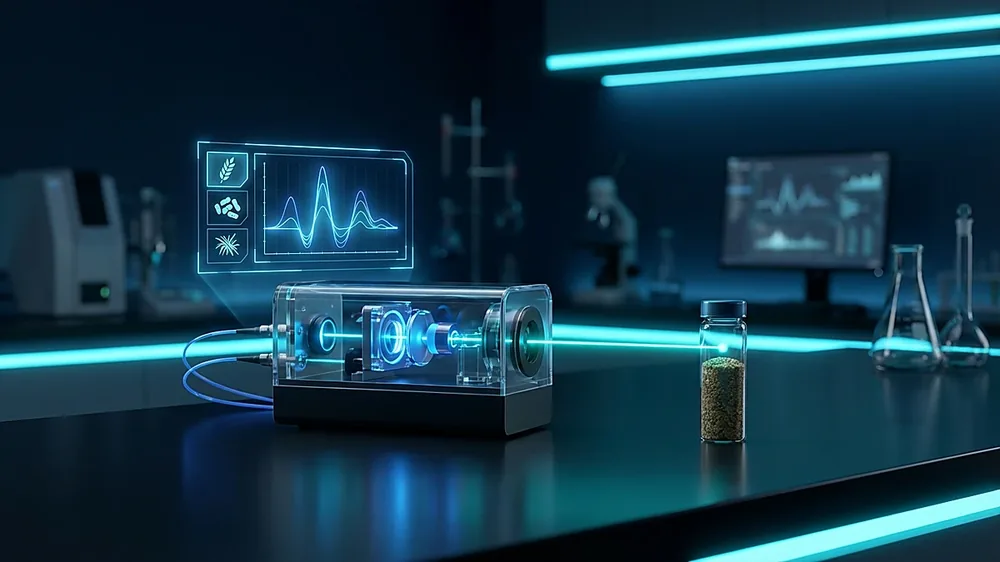
At-line and online instruments — mounted near the intake pit or in a production line — eliminate the sample transport step entirely. These configurations are increasingly common in large integrated feed operations where real-time line corrections are part of the formulation strategy. The tradeoff is that process environment instruments require more thorough installation procedures and more frequent validation against the lab instrument to ensure results stay aligned.
For operations weighing instrument options, SpectroScience's comparison of FT-NIR, dispersive, and filter-based NIR technology types lays out the practical differences in a feed and grain context, including guidance on which configurations suit different throughput requirements.
Operational Disciplines That Keep NIR Results Reliable
A NIR instrument that produces reliable results year after year isn't the result of buying the most expensive model. It's the result of consistent operational discipline. The practices that separate high-performing NIR programs from struggling ones are well understood and not technically complex — they're just routinely underemphasized during instrument installation and poorly documented in operational procedures.
Instrument warm-up is the most commonly neglected step. Most NIR instruments require 15–30 minutes of warm-up before the detector and light source reach thermal equilibrium. Running samples before warm-up introduces a repeatable bias that looks like random noise but is actually tied to instrument temperature. Establishing a mandatory warm-up policy and building it into your lab's opening checklist eliminates this source of error entirely. It costs nothing to fix.
Reference check samples — certified or in-house reference materials with known composition values — should be run at the start of every analytical session. If your check sample results fall outside the expected tolerance window, the root cause should be investigated before production samples are run. This single practice catches instrument drift, calibration issues, and sample preparation problems before they contaminate production data. The cost of running two check samples per shift is trivial relative to the cost of a batch reformulation driven by bad NIR data. And that's a scenario worth avoiding every time.
Free tool — NIR ROI Calculator: Plug your sample volume, current method cost, and analyte spec into the SpectroScience NIR ROI Calculator to see annual savings and payback period for your operation. Open the ROI Calculator →
SpectroScience students get access to the NIR Decision Tree — step-by-step framework for deciding when NIR is the right measurement tool vs. wet chemistry. Available as a free download in the student resource library.
Access the PDF libraryNIR Fundamentals Course — Lesson 9: NIR vs. Wet Chemistry
This lesson compares NIR spectroscopy with traditional wet chemistry methods, highlighting the speed and efficiency advantages NIR offers in feed quality assessment. It explains how NIR can provide rapid results without the lengthy processing times associated with wet chemistry, making it a preferred choice in high-throughput feed mills.
Explore Lesson 9 in the NIR Fundamentals courseWant to Master NIR Spectroscopy?
Our 32-lesson online course covers everything from Beer-Lambert Law to PLS calibration — built for food, grain, feed, and dairy professionals.