Cut Lab Wait Times From Hours to Minutes: How NIR Spectroscopy Pays for Itself in Feed and Grain Operations
Learn how NIR spectroscopy reduces lab wait times from hours to minutes and pays for itself in feed mill and grain operations. Real numbers included.
· 10 min read · Vitaly Kirkpatrick
Why NIR Spectroscopy Is Worth the Investment for Food and Feed Operations
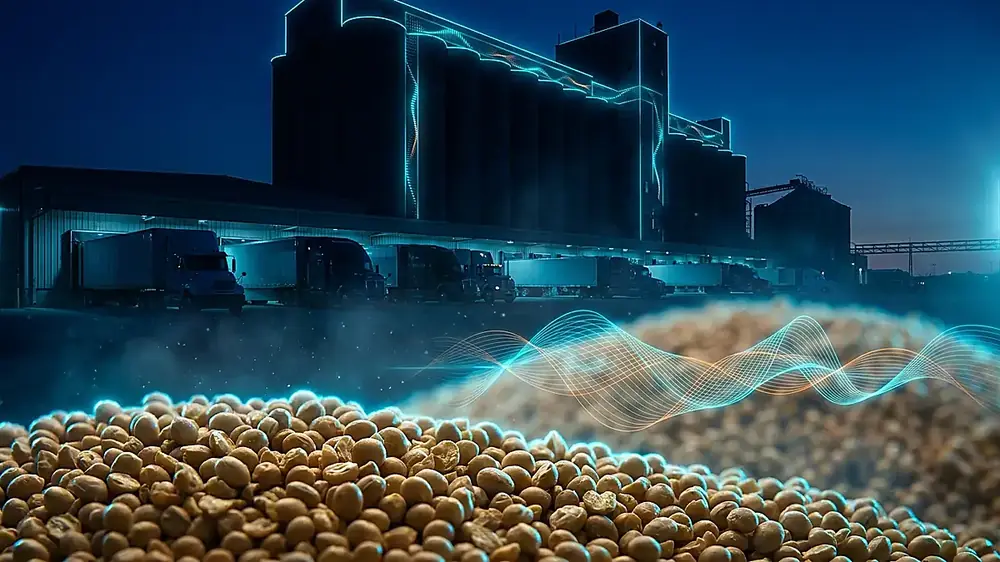
NIR spectroscopy is reshaping how feed mills, grain elevators, and food processors handle quality control. Operations still running every incoming load through full wet chemistry are spending hours on results that were needed before the truck even parked. Consider a feed mill with 12 truckloads of soybean meal waiting at the dock — drivers idle, production scheduling delayed — because wet chemistry results are still 40 minutes out. That is not a lab problem. That is a business problem. This article breaks down what drives that bottleneck, how near-infrared analysis closes the gap, and where the real value shows up across your supply chain. For a broader look at where this technology fits in grain, feed, and food operations, this overview provides a solid starting point before getting into the bottleneck problem specifically.
Why Traditional Lab Methods Create Bottlenecks
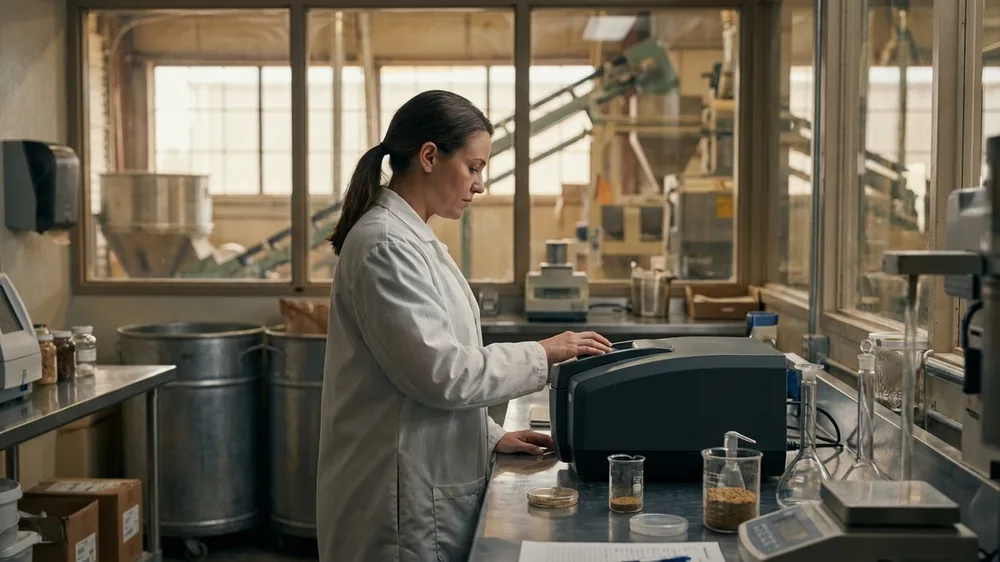
A dairy processing plant producing cheese or yogurt cannot wait 90 minutes for a protein or fat result on each batch. Neither can a flour mill blending for a bakery customer with a tight moisture specification. The result arrives after the decision has already been made — or after the load has already moved.
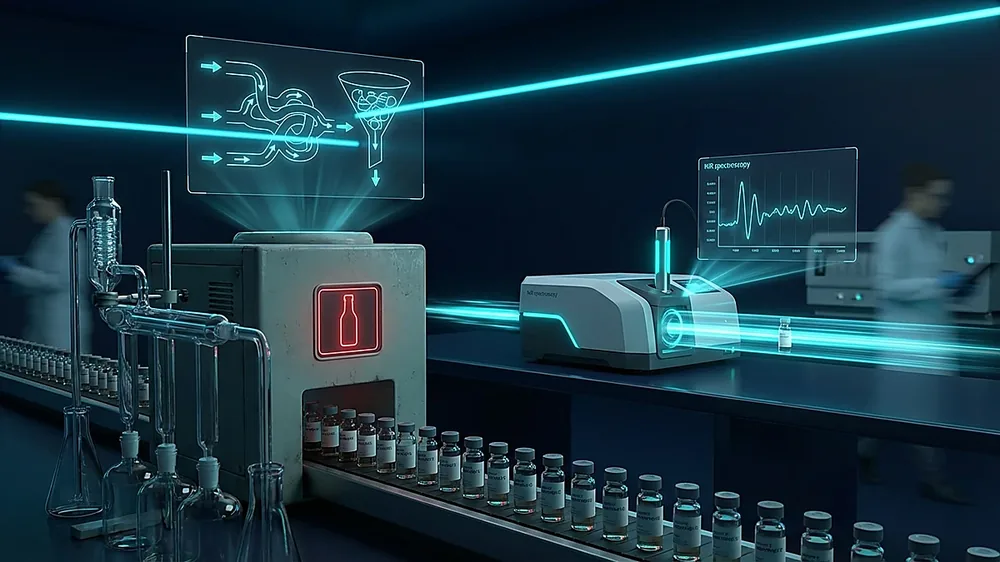
Accuracy is not the core issue with traditional methods. The real constraints are turnaround time, sample destruction, reagent costs, and the skill required at every stage. For high-throughput operations, those constraints stack up fast.
One off-spec batch that slips through because results arrived late can cost more than a full year of near-infrared testing. Real-time monitoring is simply not possible with traditional methods. A Kjeldahl protein analysis cannot run on dough moving down a conveyor. NIR spectroscopy can handle exactly that scenario.
NIR fills the gap between routine production decisions and full lab analysis. It does not replace reference chemistry. It handles the volume of checks that do not need the lab every single time. For a direct comparison of NIR against Kjeldahl and other wet chemistry methods, this article on Kjeldahl vs. Dumas vs. NIR covers real cost and accuracy differences in detail.
The Cost of Slow Results in High-Volume Operations
Consider a feed mill receiving 10 to 15 truckloads of soybean meal per week. Each load requires a protein and moisture check before entering production. With wet chemistry, those results take 60 to 90 minutes per sample. During that window, the load sits. The receiving dock backs up. Production scheduling adjusts around the delay.
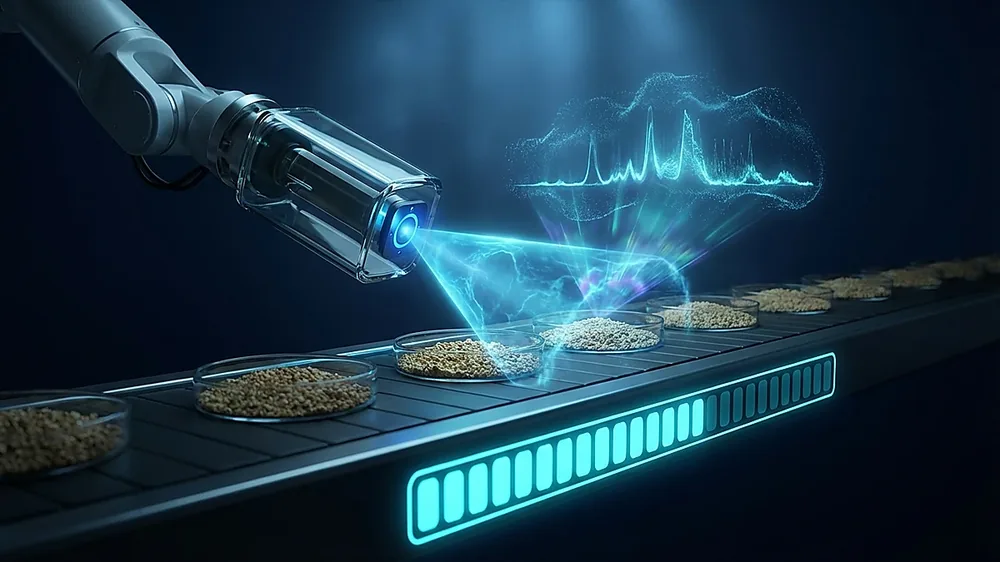
Multiply that across a full week and the hidden cost becomes visible. It shows up in labor, dock space, and missed scheduling windows. NIR spectroscopy on that same workflow takes under two minutes per sample. Every load gets tested. Results feed directly into the receiving log. Supplier negotiations are backed by data, not spot checks.
A mid-size feed mill running 12 loads per week with a 75-minute average wet chemistry turnaround spends roughly 900 minutes — 15 hours — waiting on results each week. Shifting that volume to NIR brings total analysis time for the same 12 loads under 30 minutes.
The labor savings alone typically recover a benchtop instrument cost within the first 12 to 18 months of operation. For a detailed breakdown of how to build that business case, the NIR ROI calculation guide walks through the inputs and assumptions step by step.
How NIR Spectroscopy Works
Near-infrared instruments shine light in the 780–2500 nm range onto a sample. Different chemical components — water, protein, fat, starch — absorb that light at characteristic wavelengths. The instrument measures which wavelengths are absorbed and in what amounts. That absorption pattern becomes the basis for predicting composition.
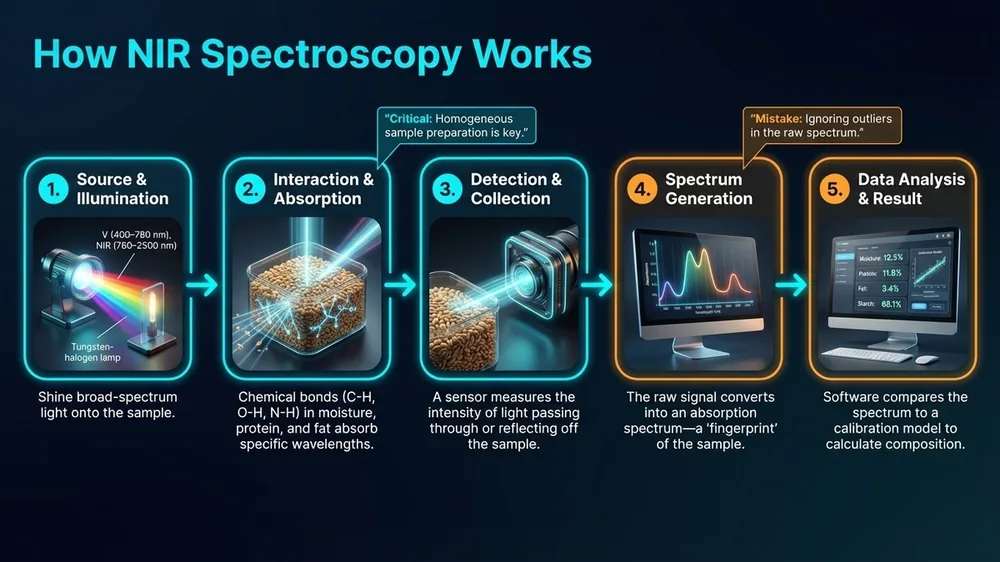
Each compound leaves a distinct signature in the spectrum. Water absorbs strongly near 1450 nm and 1940 nm. Protein has characteristic bands near 2180 nm. Fat shows up differently than starch.
Think of it like a fingerprint reader. The instrument is not looking at one feature — it reads the whole pattern at once and matches it against what it has been trained to recognize. The instrument does not read those numbers directly. It reads a full spectrum and uses a calibration model to translate that data into a result that can be acted on.
For a deeper explanation of the physics behind these interactions, this article on NIR light-matter interaction, absorption, and overtones covers bond stretching, combination bands, and what each region of the spectrum actually represents.
Note: NIR spectroscopy measures molecular vibrations — bond stretching and bending — caused by near-infrared light. It is a physical interaction with the chemistry of the sample, not a wet reaction. That is why it is non-destructive and requires no reagents.
Understanding NIR Calibration Models
A calibration model is the mathematical link between the spectrum and the lab reference value. Building a good model requires three things: representative samples, accurate reference data, and enough variation to cover the full range the instrument will see in production. Skip any of those three and the instrument will produce unreliable results — even a high-quality one.
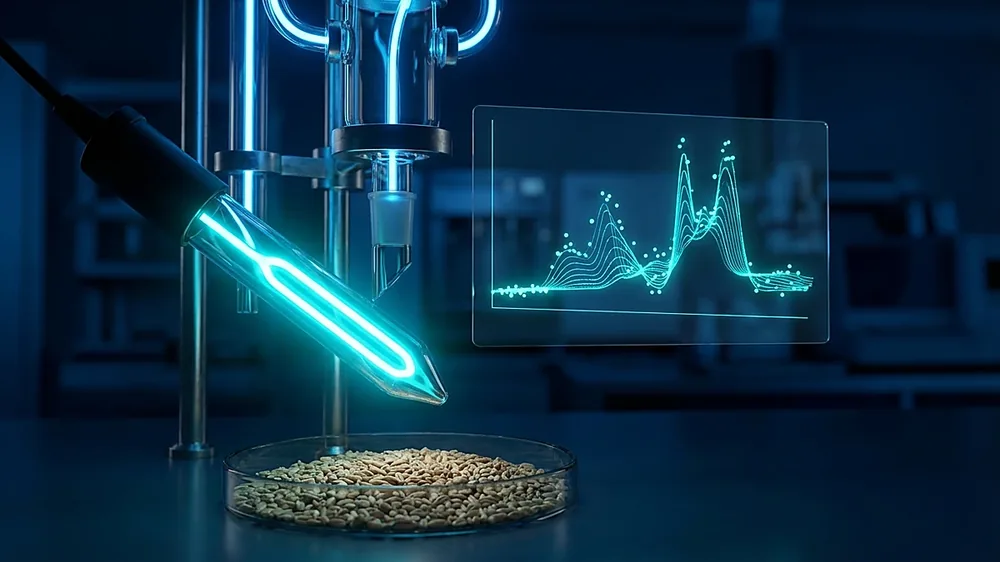
Most instrument vendors supply pre-built global calibrations for common commodities like wheat, corn, and soybean meal. These work well as a starting point. For specialty ingredients or niche products, a local calibration built from your own samples and your own reference lab will almost always outperform a global model.
Calibration is a maintenance task, not a one-time setup. A new crop year can introduce real compositional shifts. A new supplier can push samples outside the range the model was built on. When that happens and no one has checked the calibration against fresh reference data, performance degrades quietly over months. No one catches the drift until a customer complaint surfaces.
Operations that treat calibration as something filed away after installation consistently run into preventable accuracy problems. It needs to be revisited on a regular schedule. For guidance on avoiding the most common calibration errors, this article on NIR calibration validation pitfalls covers drift, validation frequency, and how to keep performance reliable over time.
Where NIR Adds Value Across the Supply Chain
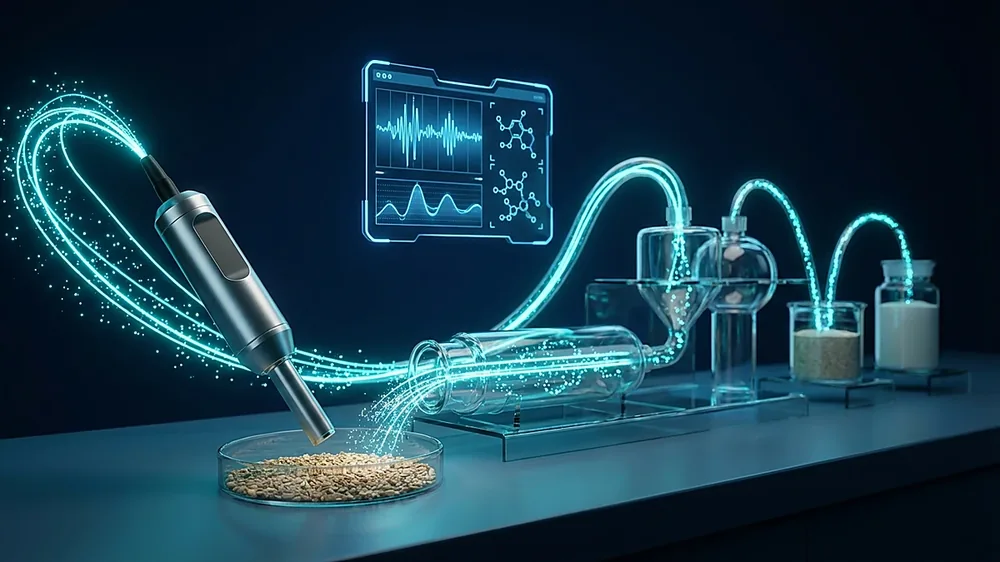
The applications that appear consistently in food and feed operations fall into three areas. Each has a clear business case tied to speed, consistency, or cost reduction.
Incoming Raw Material Inspection
This is where return on investment becomes visible fastest. Oilseed processors test incoming canola or sunflower seeds for oil and protein content before acceptance. Feed mills confirm that corn or soybean meal meets specification before it enters compound feed production. Beverage producers check sugar content and alcohol levels in fruit juice or beer in minutes, not hours.
Without rapid analysis, most of those decisions rely on visual inspection or one sample per day sent to the lab. With NIR spectroscopy, every load gets tested. That builds an auditable data record that changes how supplier negotiations are conducted — and how quickly disputes get resolved.
A grain elevator in Eastern Europe moved from spot-checking one in five trucks during harvest to testing every single load after adopting NIR. The data accumulated in one season restructured three supplier contracts. That outcome is not unusual. It reflects what happens when decisions shift from estimates to measured values.
Grain receiving is one of the highest-volume inspection points in the supply chain. An elevator handling hundreds of truckloads during harvest cannot run each load through a wet chemistry workflow. At-the-scale NIR analysis makes it possible to test every load in real time. For a practical look at how that works on the ground, this article on NIR in grain receiving operations covers the workflow, the calibrations typically needed, and the data management side of high-volume receiving.
In-Process Monitoring
Dairy plants check fat and protein in milk and cheese curds at multiple points during processing. Pet food lines monitor moisture before and after drying. Baked goods operations confirm moisture in product coming off the oven before it moves to packaging. These measurements must happen in near-real time to be actionable.
When QC teams learn to use inline monitoring effectively, the first shift is in how they read the data — trends, not single results. That is what wet chemistry cannot provide. A single lab result tells you where the operation was. A continuous trace shows where it is heading.
Catching a drying curve shift early prevents a full batch loss. A pet food plant running a 2-tonne dryer does not get a second chance once the product is over-dried and packaged.
For dairy operations specifically, inline NIR analysis has become standard practice at many plants running continuous pasteurization lines. Fat and protein shift with seasonal changes in milk composition. Catching those shifts during processing — rather than after packaging — prevents costly rework. The combination of speed and continuous data coverage is what makes this approach fundamentally different from anything a traditional lab can deliver at production scale.
One failure mode seen repeatedly in plant operations: teams that install in-process NIR but keep treating the output as a secondary check rather than an action trigger. If the team is not trained to respond to trend data in real time — adjusting drying temperature, flagging a blend deviation, holding a tank — the operation is paying for the instrument without getting the operational benefit. The instrument does not prevent off-spec product. The team's response to its data does.
Finished Product Release Testing
NIR spectroscopy also plays a practical role at the end of the production line. Finished feed lots, bagged grain products, and processed food items all require composition verification before release. Running those checks through wet chemistry adds hours to product hold time.
With NIR, a finished lot can be scanned and a release decision made in under two minutes. Operations using NIR for release testing report shorter hold times, lower lab reagent consumption, and faster customer order fulfillment. The data also supports traceability documentation without adding manual record-keeping steps.
Free tool — NIR ROI Calculator: Plug your sample volume, current method cost, and analyte spec into the SpectroScience NIR ROI Calculator to see annual savings and payback period for your operation. Open the ROI Calculator →
SpectroScience students get access to the NIR Quality Checklist — pre-scan checklist covering warm-up, reference scan, sample condition, and environmental factors. Available as a free download in the student resource library.
Access the PDF libraryNIR Fundamentals Course — Lesson 9: NIR vs. Wet Chemistry
This lesson compares NIR spectroscopy with traditional wet chemistry methods, highlighting the significant time savings and efficiency gains that NIR can provide. It emphasizes how NIR can deliver rapid results, which is crucial for maintaining smooth operations in feed and grain quality control.
Explore Lesson 9 in the NIR Fundamentals courseWant to Master NIR Spectroscopy?
Our 32-lesson online course covers everything from Beer-Lambert Law to PLS calibration — built for food, grain, feed, and dairy professionals.