Understanding NIR Ash Prediction: How It Works and When to Trust It
Learn how NIR ash prediction works, when to trust it, and how calibration quality determines accuracy in grain and feed operations.
· 9 min read · Vitaly Kirkpatrick
Quality managers at grain elevators and feed mills ask us this more often than almost any other question: "Can I actually trust the NIR ash number my instrument gives me?" It is a fair concern. NIR ash prediction works differently from moisture or protein measurement — minerals do not absorb NIR light directly the way water or protein bonds do, and that distinction matters when you are deciding whether to act on a number or send a sample to the muffle furnace. Here is what your team needs to understand before staking a load acceptance decision on a NIR ash result.
How Does NIR Spectroscopy Work?
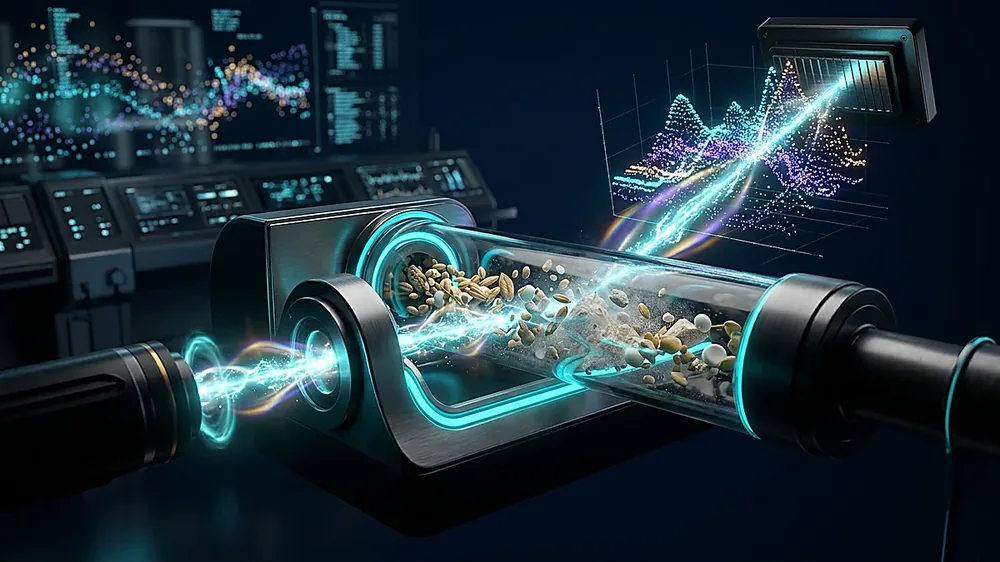
NIR spectroscopy measures how near-infrared light — in the 780 to 2500 nm wavelength range — is absorbed by your sample. Different molecular bonds absorb energy at different wavelengths. This produces a spectrum that functions as a fingerprint of the sample's composition. The instrument captures that fingerprint, and a calibration model translates it into numbers your QC team can act on.
Field tip: Calibrate your NIR spectrometer on a regular schedule. Even a well-built model drifts over time if instrument performance is not verified against reference standards.
The practical advantage is non-destructive, real-time analysis. In grain receiving or feed mill intake, you are not waiting on a furnace. You scan, you get a number, you make a call. That speed changes how a receiving operation runs. For a deeper look at the physics behind the measurement, see our article on how near-infrared light becomes a usable measurement.
What Is NIR Ash Prediction and How Is It Calculated?
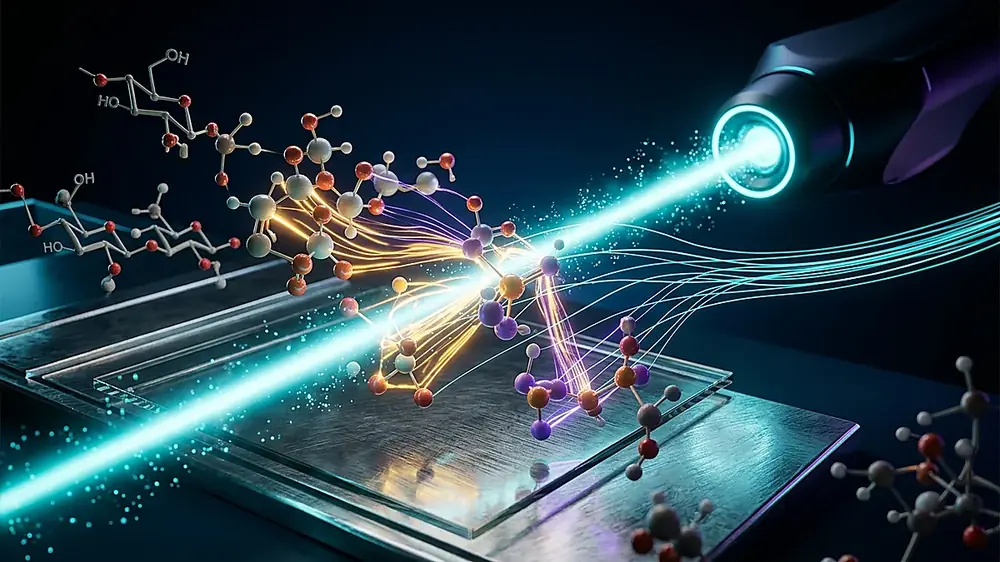
Ash is the mineral residue left after a sample is incinerated at high temperature. It includes silica, phosphorus, calcium, potassium, and other inorganic compounds. None of these minerals absorb NIR light directly the way an O-H or N-H bond does.
So NIR predicts ash indirectly. The model learns the spectral patterns that correlate with high or low ash content across your calibration samples. It is learning associations — not measuring the minerals themselves. Think of it like recognizing a customer's order by their voice pattern rather than reading a written ticket. The signal is real, but it is one step removed from what you are actually measuring.
That is why calibration quality is everything for NIR ash. A model built on 40 samples from a single growing season will not hold up when new grain varieties or different mineral profiles arrive at your intake. You need a diverse reference dataset — different moisture levels, different origins, different processing conditions — before you trust the model on the floor.
Watch out: Over-reliance on a poorly calibrated NIR ash model is one of the most common mistakes we see. A narrow calibration set produces confident-looking predictions that are quietly wrong outside the training range.
Once your calibration is solid, the speed advantage is real. A NIR scan takes around 30 seconds. Traditional ash determination by muffle furnace takes roughly 45 minutes from sample preparation to result. On a busy receiving day at a grain elevator or feed mill, that gap is not just convenient — it is the difference between holding a truck and releasing it. To understand how calibration model quality directly affects prediction reliability, our guide on why NIR calibration is needed and how it works covers the fundamentals in detail.
When to Use NIR Ash Prediction and Trust Its Results
NIR ash prediction works best as a high-speed screening tool. Grain elevators and feed mills use it to flag loads that are clearly out of spec — high soil contamination, elevated mineral loading, visible dirt inclusion — before committing to a purchase price or a formulation decision. That is where the 30-second scan pays for itself.
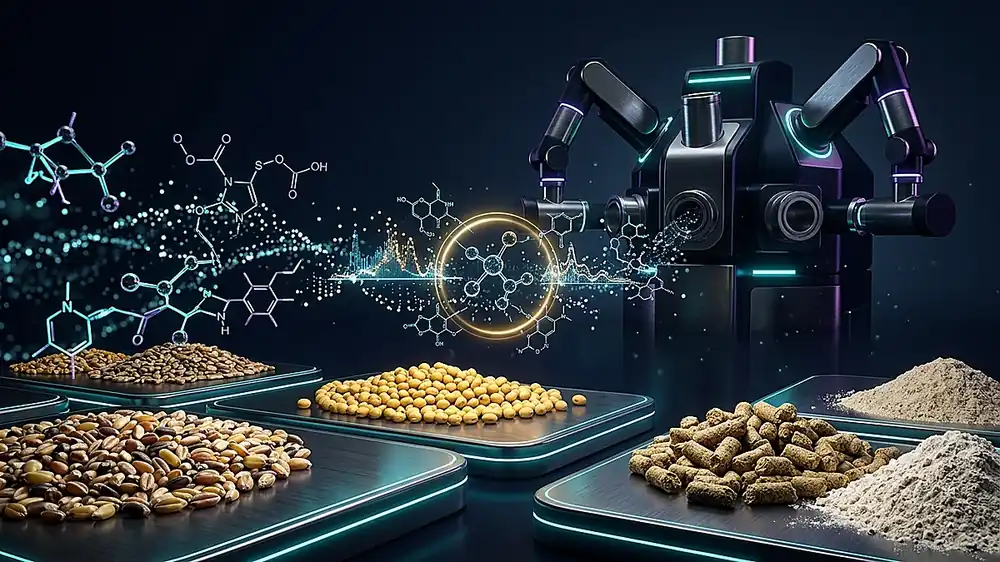
NIR ash results are most trustworthy when your calibration model covers the full range of sample types, moisture levels, and ingredient origins you actually receive. A model validated only on last year's corn crop is not validated on this year's corn crop.
Where you should be more careful is when ash is close to a contract threshold and the penalty for a wrong call is steep. In those cases, run a wet chemistry confirmation. Your NIR is not replacing the furnace for borderline decisions — it is telling you which loads do not need the furnace. That distinction matters for your lab's workflow and your auditors' expectations.
Also watch for matrix changes. If your feed mill starts sourcing a new ingredient — a different mineral premix supplier, a new grain origin, a reformulated carrier — your existing NIR ash calibration may not have seen that spectral signature before. Prediction uncertainty widens, and you will not always get a visible warning from the instrument. Periodic cross-checks with wet chemistry catch that drift before it causes a real problem.
For operations where NIR is also used for protein, moisture, and fat at the same intake point, see our overview of NIR spectroscopy applications in feed mills and grain operations.
Practical Steps for Implementing NIR Ash Prediction
- 1Build a diverse calibration set. Use reference samples that cover the full range of ash values, moisture levels, and ingredient origins you expect to see. Aim for at least 80 to 100 reference samples before committing the model to production screening.
- 2Validate against wet chemistry on a schedule. Run 10 to 15 side-by-side NIR vs. muffle furnace comparisons each month. Log the results. This gives you a defensible validation record and catches calibration drift early.
- 3Monitor instrument performance. Check instrument stability using certified reference standards at the start of each shift. Inconsistent lamp output or detector drift will degrade NIR ash predictions before you notice it in the data.
- 4Train your QC team on what the number means. NIR ash is a predicted value with an uncertainty interval — not a muffle furnace result. Operators who understand this use the tool correctly. Operators who do not will either over-trust it or ignore it.
- 5Update your calibration when your supply base changes. New suppliers, new growing seasons, and new ingredient specifications all introduce spectral variation your model may not cover. Add new reference samples and retrain periodically — at minimum once per crop year for grain operations.
One step that teams consistently skip: documenting validation results over time. When an auditor asks how your team knows the NIR ash number is reliable, "we calibrated it when we bought it" is not a sufficient answer. A running log of NIR vs. furnace comparisons — even 10 samples per month — gives you a defensible audit trail and surfaces problems before they reach a customer complaint.
NIR Ash Accuracy: What to Expect in Practice
Typical NIR ash performance in grain and feed applications falls in the range of ±0.1 to ±0.3 percentage points, depending on the commodity and calibration quality. Wheat flour ash, for example, is a well-established NIR application where tight calibrations are achievable because the matrix is consistent and reference methods are standardized. Compound feed ash is harder — more variable mineralogy, more ingredient interactions, and more sources of spectral noise.
The standard error of prediction (SEP) for your NIR ash model should be close to the standard error of the reference laboratory method itself. If your furnace method has a reproducibility of ±0.15%, your NIR model SEP should not be expected to beat that. Understanding this ceiling helps you set realistic expectations for your team and prevents misattributing normal method variation to instrument error. Our article on why your reference method limits NIR accuracy explains this relationship in detail and is worth reading before you set performance targets for any NIR ash calibration.
When SEP is a lot worse than the reference method's reproducibility, the problem is almost always in the calibration — too few samples, too narrow a range, or reference values that were not produced consistently. That is fixable. When SEP is close to or better than method reproducibility, your NIR ash model is performing as well as the chemistry it was built on.
Conclusion
NIR ash prediction is not a direct replacement for the muffle furnace. It is a fast, non-destructive screening layer that tells your lab where to focus its wet chemistry time. The calibration model is what determines whether the number on the screen is useful or misleading — so treat it accordingly.
Keep your reference dataset current. Validate against the furnace on a schedule. Train your team on what the prediction interval actually means. Do those things consistently, and NIR ash prediction becomes a genuinely useful tool in grain receiving, feed formulation, and incoming ingredient QC — not just a number you hope is right.
SpectroScience students get access to the NIR Quick Reference Guide — wavelength assignments, key absorption peaks, and common parameter ranges for food and feed analysis. Available as a free download in the student resource library.
Access the PDF libraryFree tool — Beer-Lambert Calculator: The Beer-Lambert Calculator works the absorbance = ε·b·c relationship in both directions — useful when sizing path length for a new sample type or sanity-checking a calibration curve. Open the Beer-Lambert Calculator →
NIR Fundamentals Course — Lesson 11: NIR and Lab Reference Methods
This lesson covers the relationship between NIR predictions and lab reference methods, with specific attention to how NIR ash predictions are validated against traditional muffle furnace results. Understanding these relationships helps quality control professionals decide when to rely on NIR data and when to confirm with wet chemistry in grain and feed applications.
Explore Lesson 11 in the NIR Fundamentals courseWant to Master NIR Spectroscopy?
Our 32-lesson online course covers everything from Beer-Lambert Law to PLS calibration — built for food, grain, feed, and dairy professionals.