NIR Spectroscopy in Food and Feed: What It Measures and Where It Fails
NIR spectroscopy in food and feed measures protein, moisture, and fat in seconds. Learn what it does well, where it fails, and how to get reliable results.
· 8 min read · Vitaly Kirkpatrick
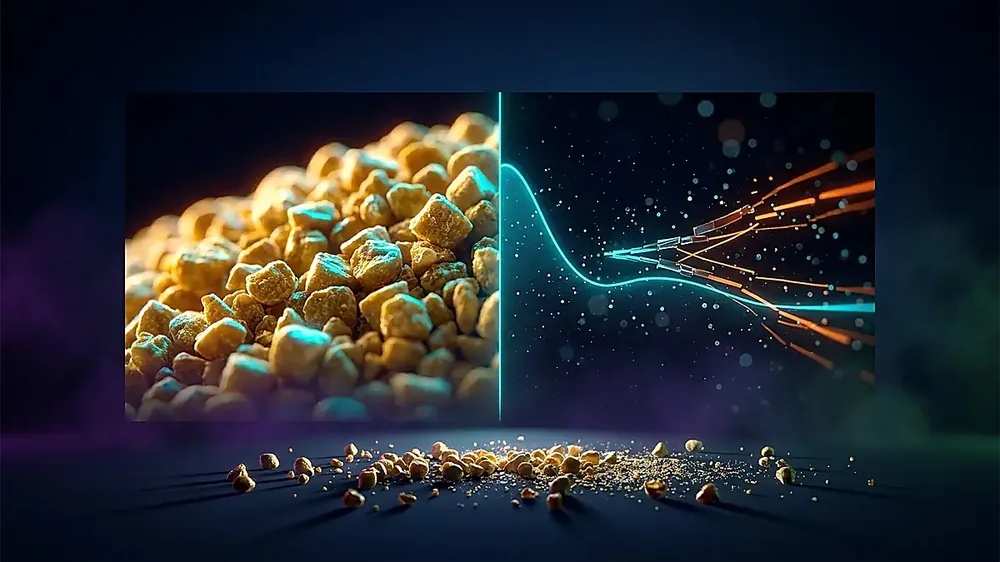
A feed mill in the Midwest added canola meal to its formulations and kept running the same corn-soy calibration. Protein predictions were off by more than 3 percentage points. That's not a minor variance — at those volumes, it's a formulation problem that can cost you a customer. I see versions of this story regularly when I visit plants. Near-infrared spectroscopy is a powerful tool, but only when the people running it understand what it actually measures and where it breaks down.
What NIR Spectroscopy Actually Measures
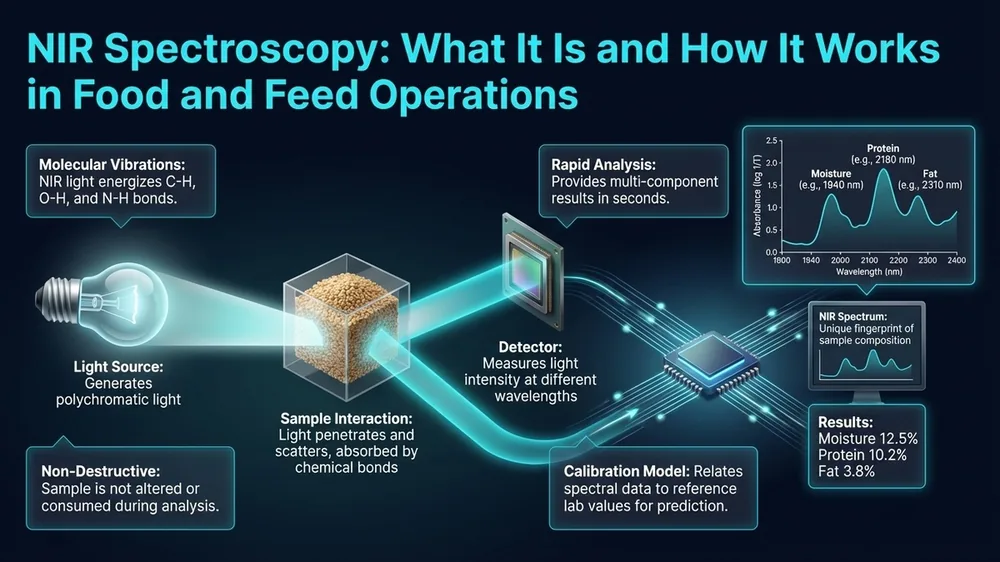
The technology uses light in the 780 nm to 2500 nm range to analyze materials without destroying them. When near-infrared light hits a sample, it causes molecular bonds to vibrate at specific frequencies. Those vibrations — called overtone and combination bands — are unique to bonds like C-H, O-H, and N-H.
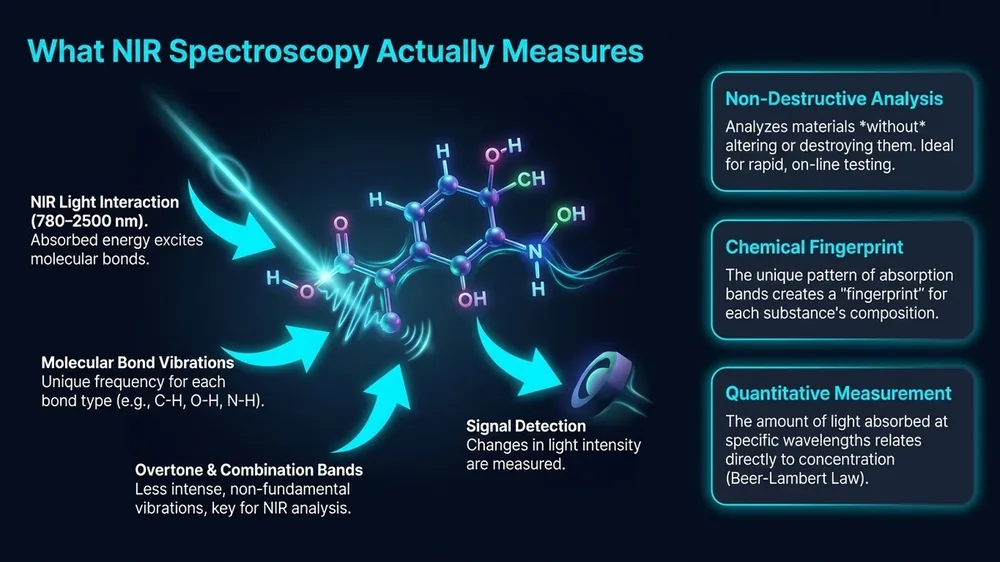
That's what makes this approach useful for measuring protein, moisture, fat, and fiber. Each component has a distinct spectral signature. The instrument reads that signature and — through a calibration model — converts it into a number you can act on.
Quality managers often ask me how NIR can measure multiple parameters at once. The answer is straightforward: a single scan captures the full spectral fingerprint. You don't need separate tests for each component. That makes the instrument well suited to high-throughput settings like dairy processing lines and pet food production. For a closer look at how NIR supports high-volume decision-making at the scale, see our article on NIR in Grain Receiving Operations: Real-Time Quality at the Scale.
How NIR Builds a Spectral Fingerprint
When near-infrared light shines on a sample, some wavelengths are absorbed and others reflect or transmit through. The absorbed wavelengths excite specific molecular bonds. The detector records the absorption pattern across hundreds of wavelengths. That pattern is the spectrum.
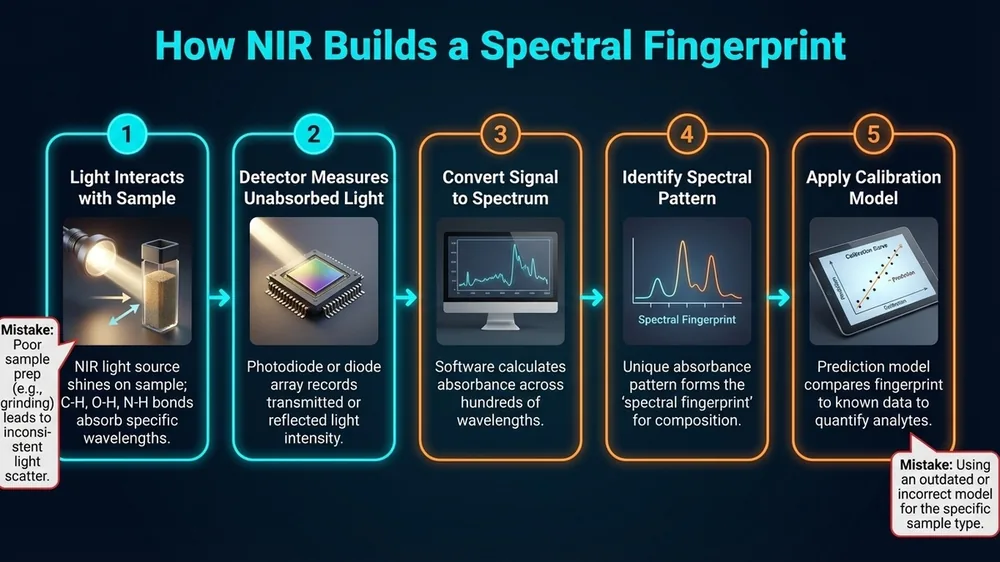
The spectrum appears as a curve with peaks and shoulders. Each peak corresponds to a molecular bond absorbing energy. Protein, fat, and moisture each appear at predictable locations in the NIR range. Think of it like a voiceprint — every ingredient has a characteristic pattern, and the calibration is trained to recognize the difference between them. That predictability is why you can calibrate for all three from a single scan.
To understand how spectral overlap gets handled in complex food and feed matrices, see our article on Why NIR Spectroscopy Needs Chemometrics: PLS, PCR, and Key Techniques Explained.
The instrument doesn't measure a single bond in isolation. It captures the full spectral pattern of a sample and uses chemometrics to extract the components of interest. The quality of that extraction depends entirely on the calibration.
Where NIR Performs Well — and Where It Doesn't
Near-infrared analysis has real strengths. When I train QC teams, I make sure we cover both sides. Knowing the limits matters just as much as knowing the advantages — and honestly, the limits are where most problems start.
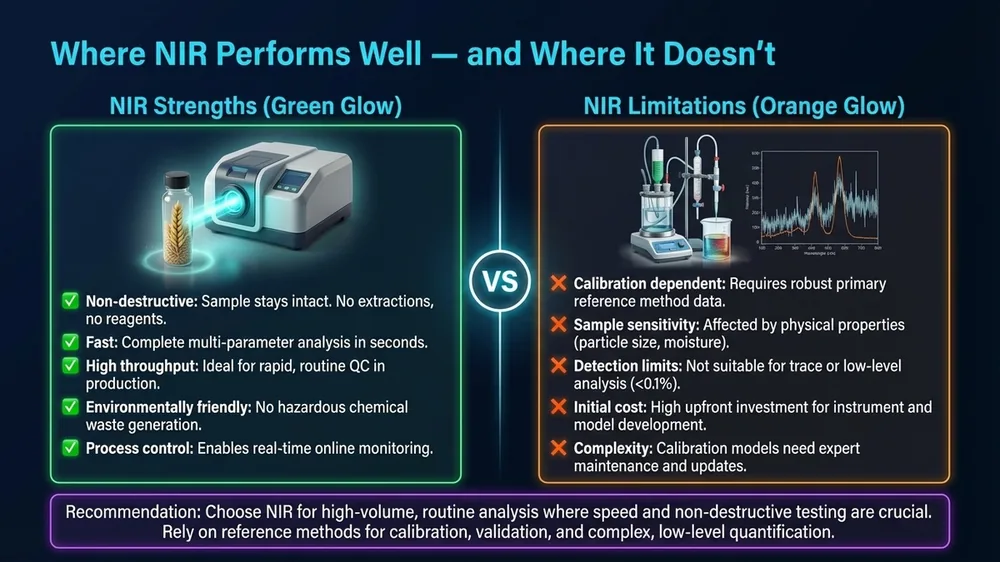
What works in NIR's favor:
- Non-destructive: The sample stays intact. No extractions, no reagents, no sample loss.
- Fast: A complete multi-parameter analysis takes seconds. In beverage production, this speed lets teams adjust batches quickly without slowing the line.
- Minimal sample prep: For most solid and liquid food matrices, the sample can be presented and scanned directly. That simplicity matters when you're running 50 samples per shift.
- Multiple parameters from one scan: Moisture, protein, fat, and fiber — all from a single reading.
- Lower per-test cost: Once calibrated and validated, the ongoing cost is a fraction of wet chemistry. A feed mill running 80 ingredient lots per week can see cost-per-test drop from several dollars with wet chemistry to cents with NIR.
What to watch out for:
- It's a secondary method: NIR requires calibration against a primary reference method. Without good reference data, your calibration won't hold. Many operations skip this step and then find that results drift.
- Water interference: Water absorbs NIR light strongly. In high-moisture samples — fresh silage or wet grain at harvest — this can distort results if the calibration wasn't built to cover that moisture range. Corn arriving at 22% moisture behaves differently than corn at 14%, and your calibration must span that range to stay reliable.
- Overlapping spectral bands: Spectra can get crowded. Chemometrics — typically partial least squares regression — is needed to pull meaningful numbers out of that complexity.
- Penetration limits: NIR doesn't penetrate deeply into dark or dense samples. Consistent sample presentation matters more than many users realize. Particle size, packing density, and temperature all affect the reading.
- Low-concentration analytes: NIR struggles to detect components present below roughly 0.1%. Amino acid profiles, mycotoxins, and trace minerals are outside its reliable range without highly specialized calibrations. For these, wet chemistry or other confirmatory methods are the right choice.
For a practical breakdown of how sample handling affects prediction accuracy, see our guide on NIR Sample Presentation and Environmental Control for Consistent Spectra.
Watch out: The most common mistake I see at feed mills is treating this technology as a plug-and-play instrument. A calibration built on wheat doesn't transfer to corn distillers grains. When your incoming ingredients change, the calibration must account for that change.
When NIR Reaches Its Limits: Practical Examples
Three scenarios show where NIR spectroscopy in food and feed environments runs into trouble — and what operations managers should do when those situations come up.
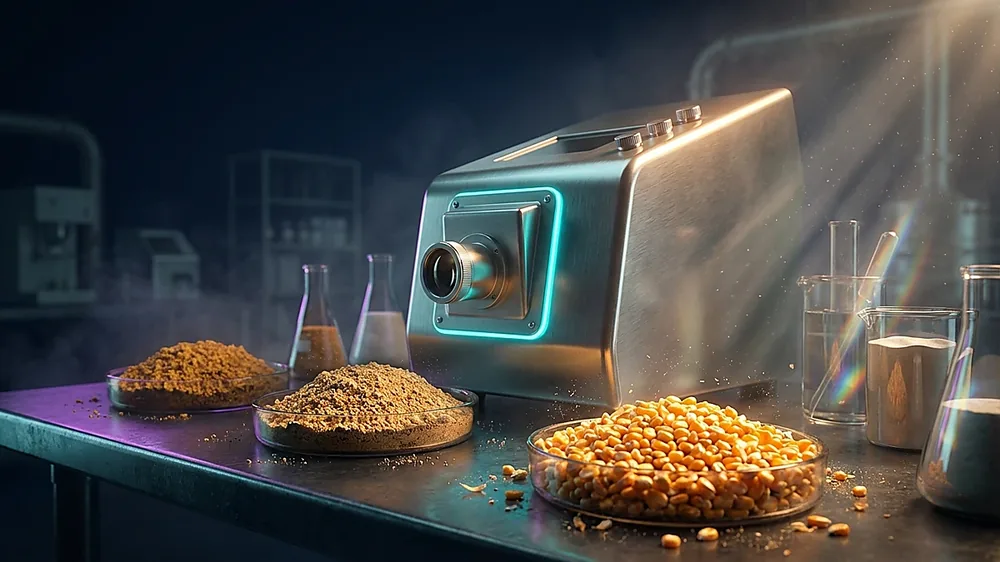
Scenario 1 — Ingredient switch at a feed mill: A Midwest feed mill running a corn-soy calibration added canola meal to its formulations without updating the NIR calibration. Protein predictions on canola meal were off by more than 3 percentage points compared to Kjeldahl reference values. The fix required collecting at least 80 representative canola meal samples, running reference analysis, and rebuilding the calibration to include the new matrix.
Scenario 2 — Seasonal moisture variation in grain: A grain elevator using NIR at the scale found that wheat predictions at harvest — when grain arrived above 16% moisture — fell outside the instrument's validated range. The calibration had been built primarily on dry wheat samples. The solution was expanding the calibration set to include wet-harvest samples and verifying performance across the full moisture range before the next season.
Scenario 3 — Temperature effects in dairy: A dairy processor noticed that fat predictions became inconsistent during summer months. Investigation showed that sample temperature was varying from 15°C to 28°C depending on when in the shift samples were presented. Because fat absorbs NIR at temperature-sensitive wavelengths, a temperature correction was added to the protocol and sample temperature was standardized to 20°C ± 1°C before scanning.
Each of these examples points to the same underlying principle: NIR in production environments is only as reliable as the boundaries set during calibration development. Results outside those boundaries should trigger a wet chemistry confirmation rather than a production decision. Don't let a drifting calibration drive an acceptance call worth thousands of dollars.
Common Applications of NIR Spectroscopy in Food and Feed
The technology gets used at multiple points across the production chain. Each application places different demands on the calibration and the instrument.

- Incoming raw material checks: Grain elevators and feed mills use NIR to screen wheat, corn, and soy for protein and moisture before acceptance. A typical target is moisture below 14% for safe storage. NIR can flag out-of-spec loads in under 30 seconds, compared to 30–45 minutes for a standard oven-drying moisture check.
- In-process monitoring: Dairy processors use NIR to track fat and protein during standardization. Keeping fat at a target of 3.5% ± 0.1% requires frequent checks that wet chemistry can't support at line speed. Inline NIR can sample continuously without stopping the process.
- Finished product verification: Pet food manufacturers verify crude protein and moisture at the end of the line. This reduces reliance on end-of-batch lab testing and allows faster release decisions. A typical improvement is reducing hold time from 24 hours to under 2 hours when NIR is paired with a statistical release protocol.
- Forage analysis: NIR is widely used in forage labs to measure acid detergent fiber (ADF), neutral detergent fiber (NDF), and relative feed value (RFV) in hay and silage samples. Commercial forage labs process hundreds of samples per day using NIR, with Kjeldahl and Van Soest methods serving as reference checkpoints.
- Oilseed processing: Soy and canola crush operations use NIR to monitor oil content in meal and to verify extraction efficiency. Real-time oil measurement lets process engineers catch inefficient extraction cycles before they result in product loss. For a deeper look at this application, see our article on How NIR Spectroscopy Measures Oil, Protein, and Moisture in Oilseed Processing.
How to Get More from NIR Spectroscopy in Your Operation
Several practical steps separate operations that get consistent, reliable results from those that deal with frequent prediction failures and calibration drift. Your lab's NIR program is only as strong as the procedures behind it.
Step 1 — Define your measurement objectives before purchasing or configuring: NIR in a feed mill receiving 15 different ingredients requires a different calibration strategy than NIR in a single-product dairy standardization line. Knowing exactly which parameters need to be measured, at what accuracy, and across what matrix range determines which instrument type and calibration depth are appropriate.
Step 2 — Invest in reference data quality: Your calibration is only as good as the reference chemistry it was built on. Reference samples should span the full range of composition expected in production — not just typical values. If wheat protein at your facility ranges from 11% to 15.5%, the calibration set must include samples across that full range. Samples clustered near the mean will produce calibrations that fail at the extremes. And that's where your riskiest incoming loads tend to land.
Step 3 — Establish a routine validation protocol: Once a calibration is deployed, validate it against wet chemistry on a defined schedule — typically 10–20 check samples per month for high-volume applications. When bias or slope correction values start to drift, that signals a need for recalibration rather than an adjustment to the correction factor.
Step 4 — Document sample presentation conditions: Temperature, particle size, and packing density should be recorded and controlled as part of the standard operating procedure. Small deviations accumulate. An operation that scans samples at inconsistent temperatures will eventually see prediction scatter that looks like instrument failure but is actually a procedure problem.
A well-maintained NIR calibration for moisture in grain should achieve an RMSEP of 0.15–0.25% against oven reference. For crude protein in feed, RMSEP values of 0.3–0.5% are achievable with a broad, well-built calibration set. Values outside these ranges warrant calibration review before the instrument is used for acceptance decisions.
What NIR Spectroscopy Means for Operations
Near-infrared spectroscopy gives food manufacturers and feed producers a fast, non-destructive method to measure composition across incoming materials, in-process checks, and finished product verification. The technique works because molecular bonds absorb near-infrared light at predictable wavelengths. A well-built calibration converts that spectral data into numbers that can drive real decisions.
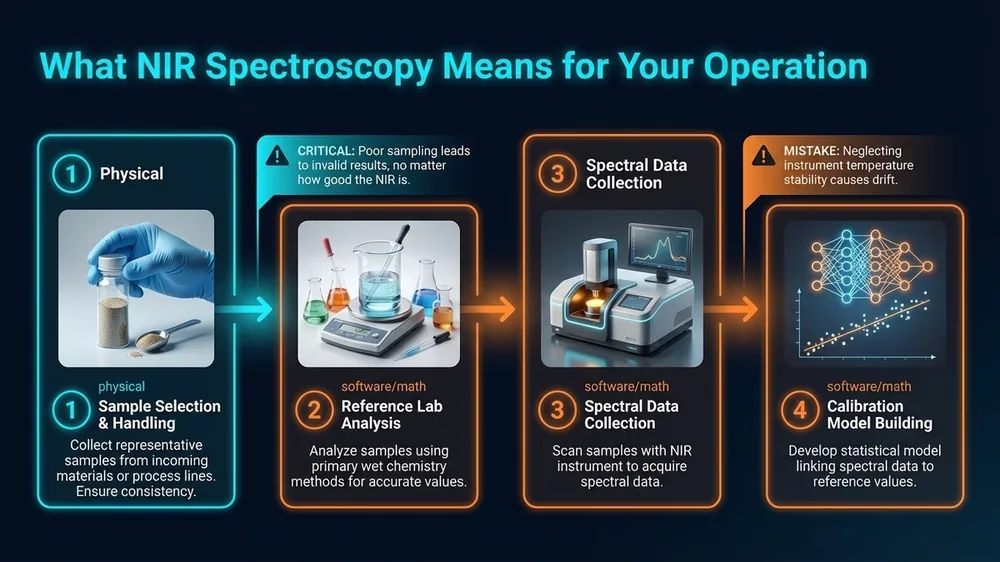
Here's the thing — the professionals who get the most out of NIR aren't the ones with the newest instruments. They're the ones who understand the boundaries of their calibration and act on data that falls inside those boundaries. When I work with clients to review struggling NIR programs, the problem is almost never the hardware. It's that no one defined what "reliable" looks like for their specific matrix, and no one set up a process to check whether that's still true six months later.
To go deeper on calibration development, see our article on NIR Calibration: Why It's needed and How It Works.
Further Reading
Selected references drawn from the NIR Accuracy Course supplemental materials.
- Chung, H. (2000). General Comparison of NIR, IR, and Raman Spectroscopy.This article provides a general comparison of NIR, IR, and Raman spectroscopy, noting that NIR offers better spectral reproducibility and higher signal-to-noise ratio despite broader and less characterized absorption bands.https://opg.optica.org/as/abstract.cfm?uri=as-54-2-239
- Serrano, D. (2025). Comparison of MIR and NIR Spectroscopy.This study compares MIR and NIR spectroscopy for predicting biomarkers of kidney function, highlighting their complementary characteristics and applications in high-throughput analysis and real-time monitoring.https://pmc.ncbi.nlm.nih.gov/articles/PMC12731082/
- (n.d.). NIR vs. Wet Chemistry: Choosing the Right Analytical Technology.Practical comparison for lab managershttps://www.bluesunscientific.com/post/choosing-between-nir-and-wet-chemistry-a-lab-manager-s-guide
- (n.d.). Accurate Analysis: NIRS versus Wet Chemistry.Forage Lab technical comparison paperhttps://www.foragelab.com/media/accurate%20analysis%20nirs%20versus%20wet%20chemistry.pdf
SpectroScience students get access to the NIR Troubleshooting Guide — systematic approach to diagnosing poor predictions, instrument drift, and calibration failures. Available as a free download in the student resource library.
Access the PDF libraryFree tool — Calibration Metrics Calculator: Enter your reference values and NIR predictions in the Calibration Metrics Calculator to compute RMSEP, RPD, R², and bias the way our course teaches it — with interpretation thresholds for grain, dairy, and feed. Open the Metrics Calculator →
Free tool — As-Is ↔ Dry Matter Converter: Use the As-Is ↔ Dry Matter Converter to translate any analyte value between as-received and moisture-free basis without doing the algebra by hand. Open the Converter →
NIR Fundamentals Course — Lesson 13: NIR in Agriculture
This lesson focuses on the application of NIR spectroscopy specifically in agriculture, detailing how it can be used effectively for analyzing various agricultural products. It also discusses the limitations and calibration challenges that can arise, which are critical for ensuring accurate measurements in food and feed formulations.
Explore Lesson 13 in the NIR Fundamentals courseWant to Master NIR Spectroscopy?
Our 32-lesson online course covers everything from Beer-Lambert Law to PLS calibration — built for food, grain, feed, and dairy professionals.