Stop Losing NIR Accuracy in Sample Prep: A Grain and Feed Handler's Guide to Every Sample Type
Stop grain and feed NIR accuracy losses at the source. This guide covers sample prep for every type — powders, liquids, and solids — with real cost benchmarks.
· 11 min read · Vitaly Kirkpatrick
Stop Grain and Feed NIR Errors Before They Start: Why Sample Preparation Determines Your Results
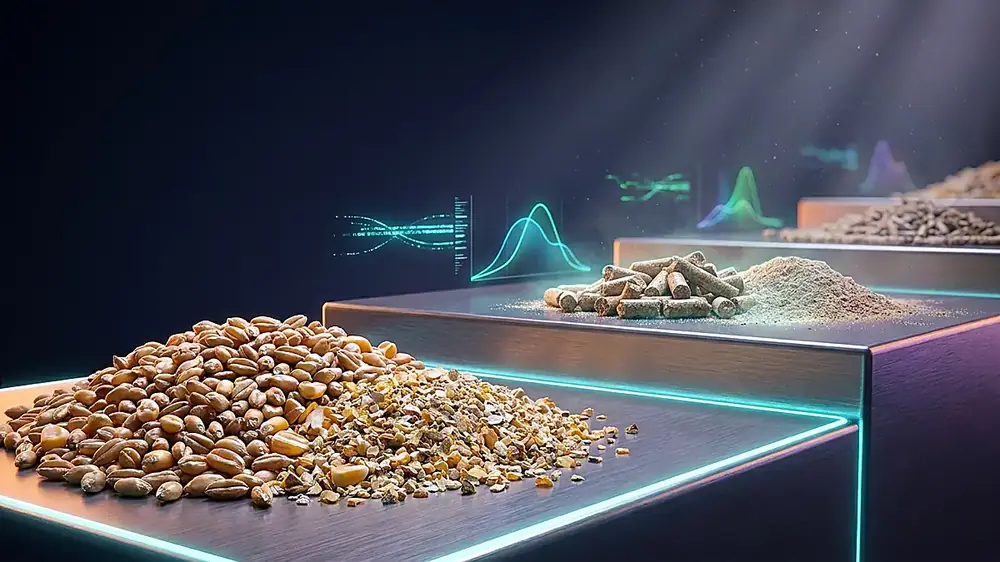
To stop grain and feed operations from losing NIR accuracy, the fix rarely starts with the instrument or the calibration model. It starts with whoever prepared the last sample. Across dairy processors, oilseed crushers, feed mills, and grain elevators, the pattern repeats: the instrument is fine, the calibration is fine, but no one wrote down exactly how to fill that sample cup — and no one checks whether the morning shift does it the same way as the afternoon shift. That gap between what you intend to measure and what you actually present to the instrument is where accuracy is won or lost. Understanding where NIR spectroscopy succeeds and where it fails starts with recognizing that most prediction errors trace back to sample handling, not instrument performance.
What Inconsistent NIR Sample Prep Actually Costs You
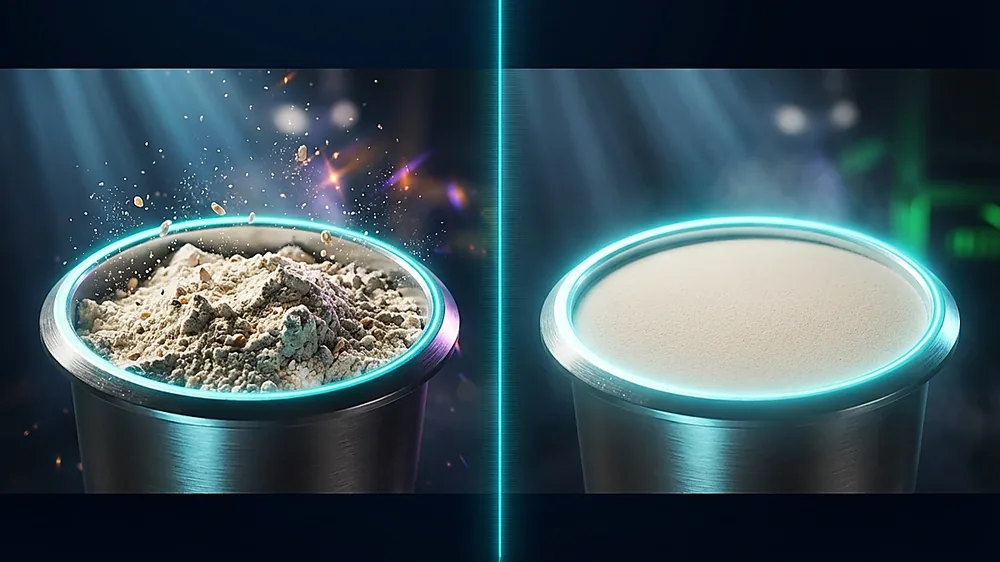
At a milling and baking facility, the team was getting moisture predictions with a standard error they could not explain. The instrument was fine. The calibration was fine. The problem was that different operators were packing the sample cup differently — loose one time, dense the next. That inconsistency showed up directly in the data. It took three weeks to find because no one thought to look at packing procedure first.
These errors compound fast. A moisture prediction off by 0.5% in a flour stream can mean overuse of conditioning water, failed bake tests, or product returned from a retail customer. In high-volume operations, that kind of recurring error costs thousands of dollars per week before anyone identifies the root cause. And that is before you factor in the lab time spent chasing a problem that was never about the instrument.
In grain receiving, the cost profile is different but equally painful. A protein prediction error of 0.3% in incoming wheat — caused by measuring a non-representative grab sample — can result in wrong segregation decisions across hundreds of tonnes of grain. At commercial protein premiums of $5–$10 per tonne, a single day of mis-sorted loads easily reaches five figures in avoidable loss. These are not theoretical scenarios. They are the predictable outcome of treating sample preparation as an afterthought.
Present a representative, consistent, and reproducible sample to the instrument every time. That single discipline determines whether your results are trustworthy.
How to Handle Different Sample Types in NIR Analysis
Samples vary widely — granular feeds, whole grains, viscous oils, fine powders, liquid dairy streams. Each type requires a different approach. What works for a ground feed sample will not work for a fat measurement in a dairy process line. Think of it like tuning a radio: the signal is there, but if the antenna is not positioned correctly for the frequency, you get static no matter how good the receiver is. The sections below cover the most common sample categories and the preparation steps that matter most for each one.
Solid Samples: Grinding, Cutting, and Pressing for Consistency
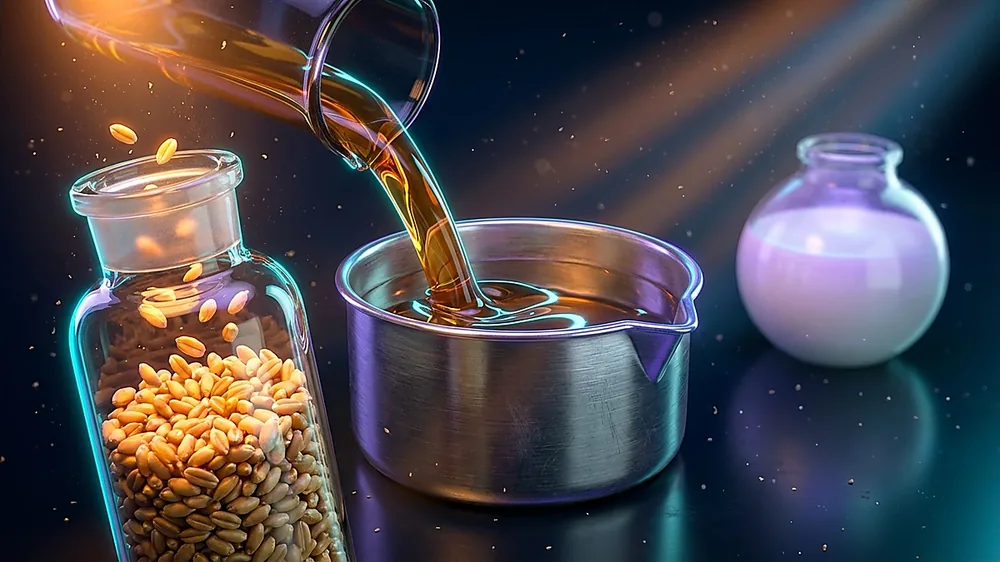
- Grinding: For bulk solids like grains and compound feeds, grinding reduces particle size and improves homogeneity. The NIR light interacts with a more uniform material. Avoid over-grinding — frictional heat changes moisture content and can alter the chemistry being measured.
- Cutting: For irregularly shaped materials — cuts of meat, pieces of fruit — precise cutting exposes a consistent surface and creates a manageable geometry for the instrument window.
- Pressing: For powders or ground material in diffuse reflectance mode, pressing into a pellet creates a smooth, uniform surface. It reduces scattering variation and improves scan-to-scan reproducibility.
Watch out: Over-grinding solid samples introduces frictional heat that changes moisture content and can alter the chemistry of the sample — corrupting results before anything is measured.
Grinding Standards That Actually Protect Your Data
Grinding is where the most silent errors enter a dataset. At feed mills, the same grinder used for sample preparation is often also used for production. That means screen size and grinder condition vary day to day. The consequences are direct: a 0.5 mm versus 1.0 mm grind screen produces samples with very different surface area, different light penetration depth, and different apparent absorbance — even when the underlying chemistry is identical. Your calibration was built on one particle size. Feed it a different one and it is comparing apples to oranges.
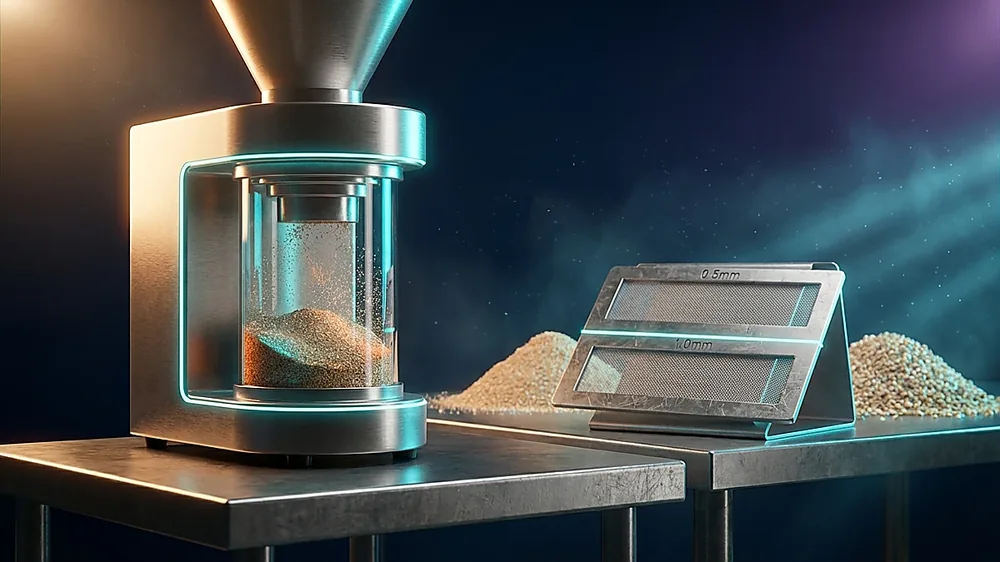
Best practice is to dedicate a laboratory grinder exclusively to sample preparation. Log screen size, grinding duration, and sample temperature after grinding as part of the sample record. For moist or high-fat materials such as wet distillers grains or full-fat soy, pre-dry to below 14% moisture before grinding. This prevents caking and uneven particle size. Where pre-drying is not feasible, the protocol should specify grinding in short bursts with a cooling interval to keep frictional heat below 40°C.
Particle size targets vary by application. For most ground feed materials, a 1 mm screen produces acceptable performance. For fine powders like wheat flour or skim milk powder, no additional grinding is needed. But monitor the baseline particle size of incoming material — changes in upstream milling propagate directly into prediction error downstream. Your QC records should flag any shift in raw material grind before it becomes a calibration problem. For a broader view of how these variables affect prediction accuracy, the GIGO principle in NIR data quality explains how upstream measurement errors accumulate into unreliable results.
Liquid Samples: Path Length, Temperature, and Flow Cells
- Cuvettes and path lengths: Use the correct cuvette with a known, consistent path length. Even a small variation in path length shifts absorbance values directly. This is not optional.
- Temperature control: Temperature affects viscosity, density, and hydrogen bonding — all of which shift the spectrum. In plants without temperature-controlled sample areas, the protocol must account for this explicitly.
- Flow cells: In processing environments — dairy lines, oilseed extraction, liquid feed systems — flow cells allow continuous, real-time measurement. A constant stream of sample passes through the beam, providing immediate process feedback without stopping the line.
Field tip: Always bring liquid samples to a consistent temperature before measuring. Even a 3–5°C difference can shift the spectrum enough to throw off a tightly calibrated model.
Liquid Sample Handling: What the Numbers Tell You
Temperature management in liquid measurement is not a minor detail — it is a calibration variable. Water has strong NIR absorption bands near 1450 nm and 1940 nm. The shape and position of those bands shift measurably with temperature. A dairy plant measuring fat and protein in whole milk at 20°C versus 25°C will see absorbance shifts large enough to produce prediction errors of 0.1–0.3% fat. That is a meaningful error when your fat specification has a tolerance of ±0.2%. If temperature compensation is not built into the calibration model or controlled in the protocol, those errors will repeat every shift.
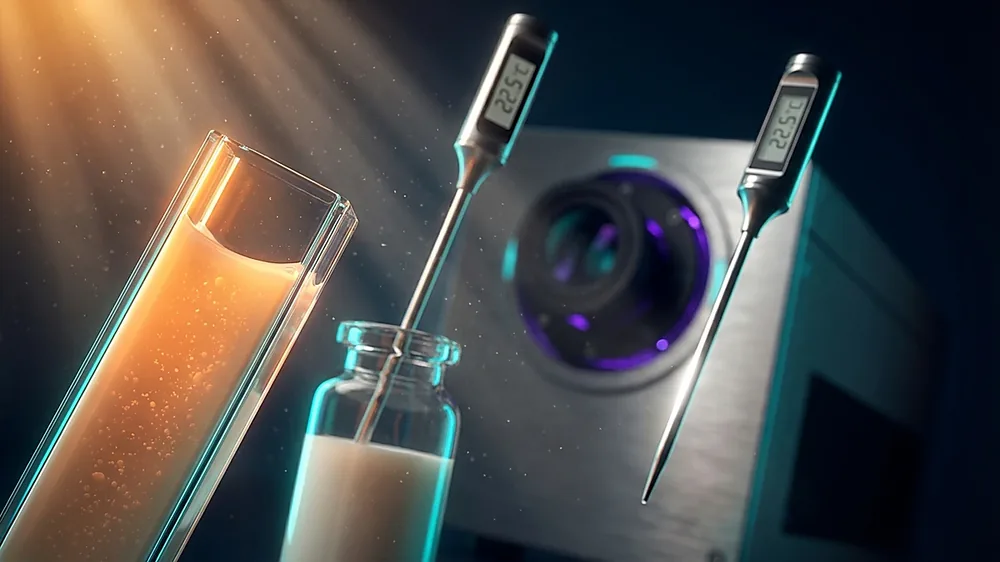
For at-line liquid measurements in a production environment, the most reliable approach is a temperature-controlled cuvette holder set to 20°C or 40°C, with the temperature logged for each sample run. Inline flow cell installations on dairy and oilseed processing lines largely eliminate this problem by measuring the product stream at process temperature — as long as the calibration was developed at matching temperatures. For facilities exploring inline measurement, the principles of real-time inline NIR monitoring in dairy processing show how flow cell geometry and temperature stability are engineered into the measurement point rather than managed manually.
Path length selection for liquids follows a straightforward rule: shorter path lengths for strongly absorbing materials like whole milk or high-fat emulsions, longer path lengths for dilute aqueous solutions or low-absorption liquids. A 0.1 mm path length cell is standard for whole milk fat measurement. A 1–2 mm path length is more appropriate for whey or skim fractions. Using the wrong path length does not just shift the signal — it can push the measurement outside the linear range of the calibration entirely. That is not a calibration problem. That is a protocol problem.
Powder Samples: Particle Size and Packing Density
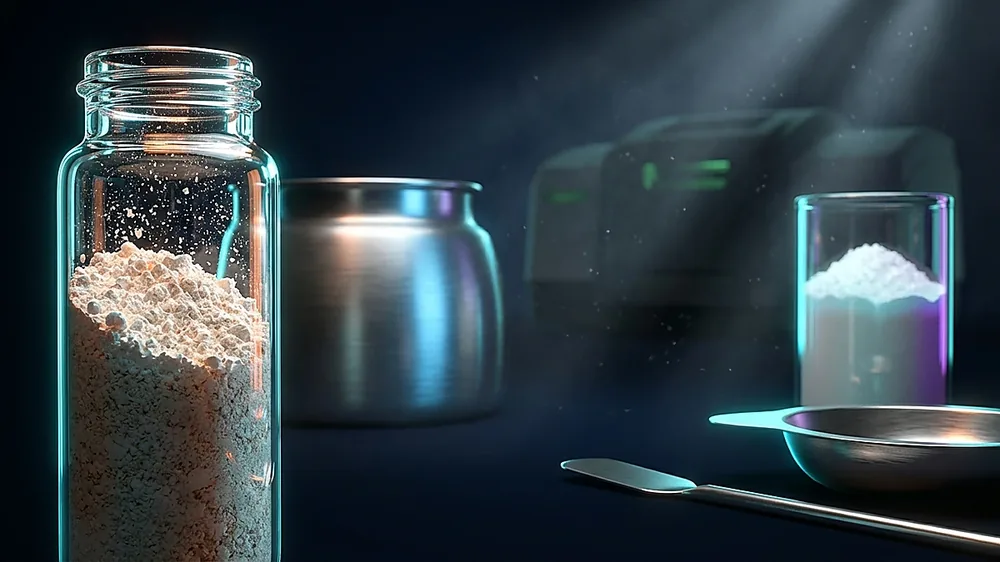
Powders are where the most inconsistency appears at feed mills and flour operations. Different particle size fractions settle and separate. How the sample cup is packed changes what the beam actually sees.
- Sieving and mixing: Achieve a consistent particle size distribution through sieving, then mix thoroughly before presenting to the instrument.
- Consistent packing: Loose packing versus dense packing changes light scattering and penetration depth. Define a standard packing procedure and follow it every time. Some instruments use spinning sample cups to average out remaining inhomogeneities during the scan — a practical workaround when particle size is variable.
Powder Measurement: Controlling the Variables That Shift Your Spectrum
For fine powders such as skim milk powder, soy protein isolate, or premix blends, the primary variables to control are particle size distribution, packing density, and surface smoothness. Of these, packing density is the one most frequently left to individual operator judgment — and the one with the most direct impact on repeatability. Repeat scans on the same sample that drift between runs almost always trace back to someone re-packing the cup differently between measurements.
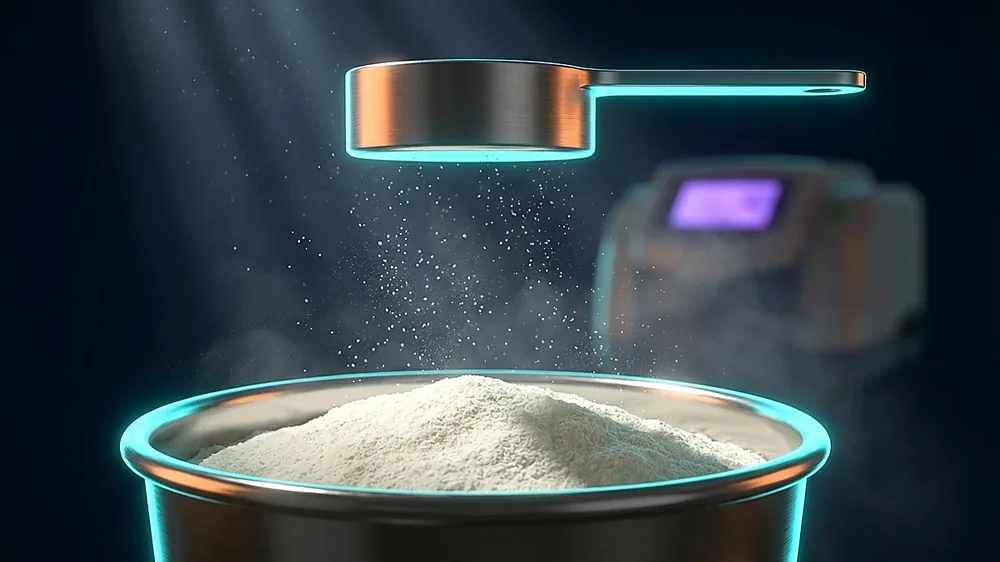
A structured packing protocol should specify a defined sample mass — typically 15–25 g depending on cup geometry — a fixed number of taps or a tamping weight, and a leveling step to create a flat, reproducible surface. Document it with photos if needed. If a lab has three operators and no written packing procedure, there are effectively three different sample prep methods running in parallel. The calibration can only account for one of them. That inconsistency will show up in prediction residuals long before anyone thinks to look at the sample cup.
One failure mode seen specifically in pet food and premix operations: operators scooping directly from the bag without homogenizing first. Fines settle to the bottom during transport. The top of the bag and the bottom of the bag are not the same material, spectrally speaking. Always mix the bulk sample before taking the sub-sample for the cup. It takes 30 seconds. The alternative is chasing unexplained prediction scatter for weeks. For a structured set of standards that apply across all sample types, the sample preparation do's and don'ts provides a practical reference to build lab SOPs around.
Building Sample Prep Protocols That Hold Up Over Time
Sample preparation discipline erodes when it is not written down. A procedure that exists only in the memory of one experienced operator is a single point of failure. When that operator changes shifts, leaves the role, or trains a new hire informally, the protocol drifts — and so do the results.
Every sample type that passes through an NIR lab should have a written SOP that covers at minimum: sample collection method, sub-sampling procedure, any required pre-treatment (grinding, drying, mixing), presentation method (cup type, fill mass, packing steps), and the temperature at measurement. That document should be version-controlled and reviewed whenever a new raw material or product type is introduced to the calibration set.
Connecting sample preparation discipline to calibration maintenance is equally important. When a prediction model drifts, the first diagnostic question should always be: has the sample preparation procedure changed? A shift in grind screen, a new operator packing cups differently, or a process change that altered incoming moisture levels can all produce what looks like calibration drift but is actually a sample prep problem. For teams managing model performance over time, understanding the relationship between calibration validation pitfalls and long-term reliability helps separate true model drift from preparation-induced error before resources are spent rebuilding a calibration that was never the root cause.
SpectroScience students get access to the NIR Sample Prep Guide — particle size, moisture, temperature, and presentation requirements for consistent NIR results. Available as a free download in the student resource library.
Access the PDF libraryNIR Fundamentals Course — Lesson 25: Sample Preparation
This lesson focuses on the critical aspects of sample preparation, emphasizing the importance of consistent methods for different sample types. It provides practical guidance on how to establish and maintain protocols that ensure accurate and repeatable results in NIR analysis.
Explore Lesson 25 in the NIR Fundamentals courseWant to Master NIR Spectroscopy?
Our 32-lesson online course covers everything from Beer-Lambert Law to PLS calibration — built for food, grain, feed, and dairy professionals.