NIR for Grain Moisture: Applications in Combines, Dryers, and Storage
Learn how NIR moisture measurement improves grain harvest, dryer control, and bin storage. Real-time readings, calibration tips, and ROI guidance.
· 9 min read · Vitaly Kirkpatrick
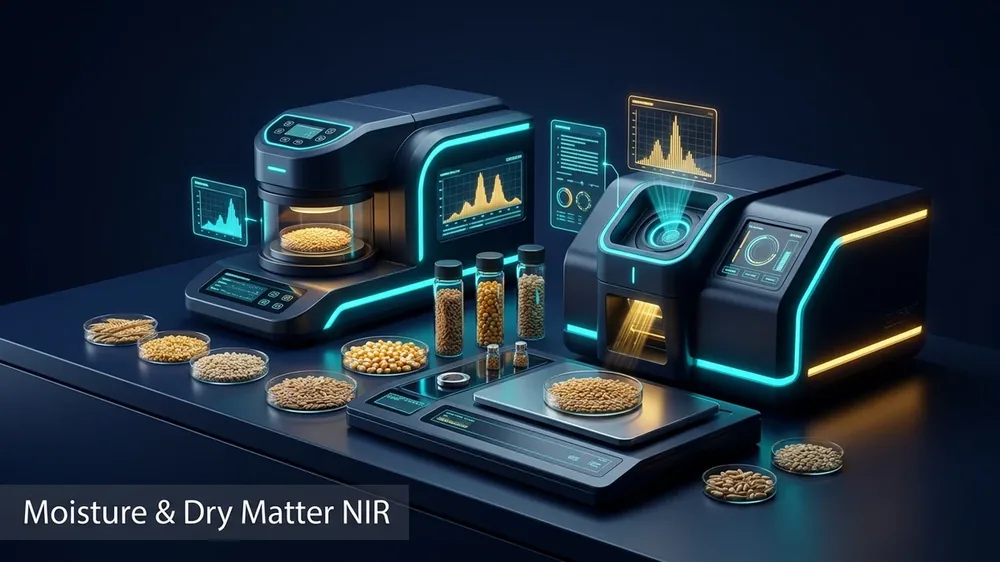
NIR moisture measurement has changed how grain operations handle one of their most costly decisions — when to dry, how long to dry, and when to stop. A grain elevator running without real-time NIR moisture data risks over-drying corn by two percentage points or more. That gap translates directly into wasted propane and lost yield weight. Fast NIR moisture readings, updated in under 30 seconds, give operators the data they need at every stage — combine, dryer, and storage bin — before a bad decision becomes an expensive one.
How Does NIR Work for Grain Moisture Measurement?
NIR spectroscopy measures moisture by analyzing how grain absorbs light in the near-infrared region. Water has strong, predictable absorption bands in that spectrum. The instrument reads those signals and converts them to a moisture value — typically in under 30 seconds. Compare that to a traditional oven drying or Karl Fischer method, which can take 45 minutes or more per sample. Operations processing dozens of truck loads per day gain significant throughput advantages when NIR moisture readings replace manual lab methods at the intake point.
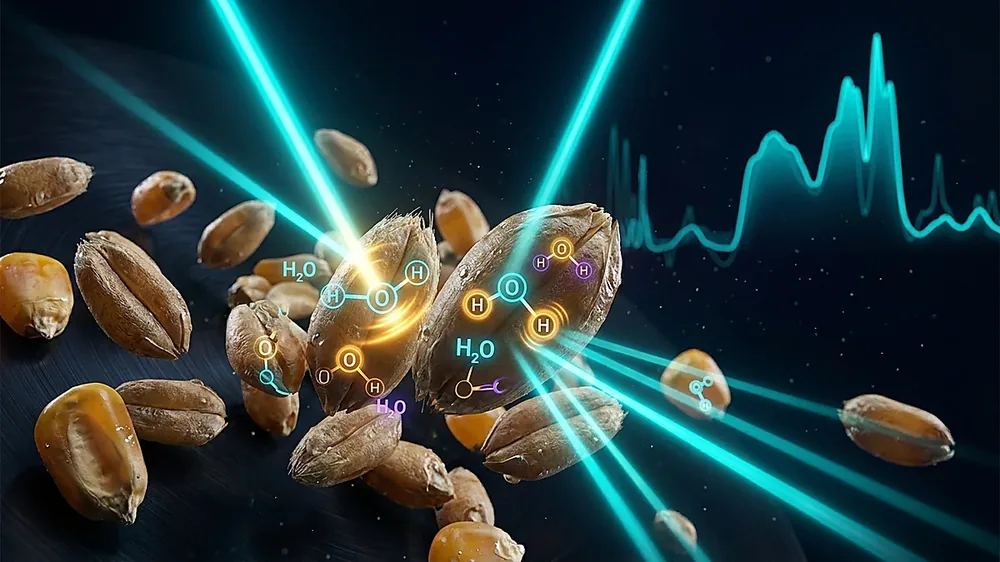
Field tip: Ensure your NIR device is properly calibrated for the specific grain type you are analyzing. A corn calibration will not perform reliably on wheat or soybeans.
A calibration model works like an experienced grain merchandiser who has handled thousands of samples. That person can assess quality quickly because they have seen the full range. The model does the same thing mathematically. It is trained on a representative set of samples, validated against reference methods, and it knows what moisture looks like in your grain. But it needs regular updating. Seasonal shifts, new varieties, and different growing regions can all push predictions off-target if calibration has not kept pace with what is moving through your facility. For a detailed look at how NIR calibration works and why it matters, see our article on NIR Calibration: Why It's Essential and How It Works.
NIR moisture readings in under 30 seconds provide a decisive speed advantage over wet chemistry methods — especially during peak harvest intake when sample backlogs directly slow operations.
What Are the Benefits of On-Combine NIR Systems?
Installing NIR on the combine itself opens up real agronomic decisions during harvest. Real-time moisture readings across a field let operators adjust harvest timing on the fly. They can target the moisture window that protects quality without piling on unnecessary drying costs. With live NIR moisture data coming off the machine, operators can redirect loads mid-harvest. High-moisture sections go straight to the dryer. Lower-moisture sections go directly to storage. That kind of routing decision used to happen on a guess. Now it happens on a number.

Early identification of high-moisture grain cuts spoilage risk before it becomes a storage problem. Without a real-time signal, wet grain can end up in a bin that was not planned for active aeration. That is a problem grain storage managers do not want to discover in November. On-combine NIR gives the warning before the routing decision is made, not after.
Watch out: High-dust environments during harvest can affect on-combine NIR accuracy. Keep sensor windows clean and schedule regular checks during heavy cutting conditions.
Integrating NIR output with GPS and yield mapping layers gives a full picture of field conditions. Zones that are consistently wetter can be flagged for earlier harvest timing the following season. That data starts paying for itself in planning the next crop year. Your calibration needs to reflect the varieties actually being cut — not last year's samples from a different hybrid.
How Can NIR Enhance Dryer Control?
Over-drying is expensive in two ways: energy cost and grain quality damage. Every percentage point dried past target on a high-temperature dryer costs real propane dollars. Excessive heat also cracks kernels and damages test weight. NIR sensors installed at dryer inlets or outlets give operators a continuous moisture signal. That signal lets them make incremental adjustments to air temperature and flow rates before a whole batch goes too far.
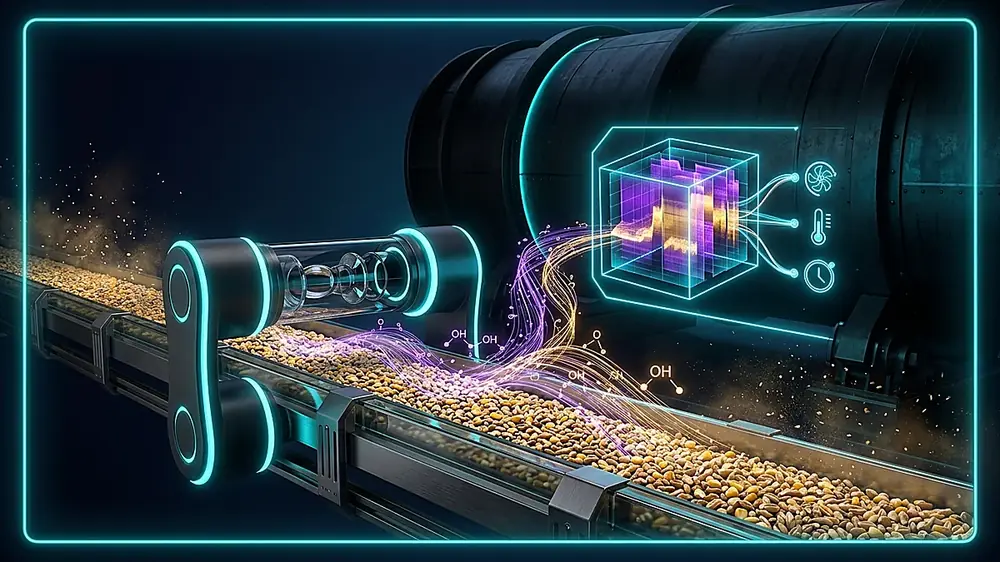
Real-time NIR moisture data enables precise control over drying parameters, reducing energy costs and protecting grain quality.
Operations that add NIR to dryer control report meaningful improvements in drying consistency. Operators stop guessing based on periodic manual checks. Instead, they respond to a live reading every 30 seconds. That responsiveness tightens moisture distribution across a batch. One common failure: operators trust the dryer's built-in timer settings and skip the outlet NIR reading entirely. When grain temperature swings with ambient conditions, those timer settings go stale fast. Moisture spec drifts with them.
Note: Regular maintenance of NIR sensors is essential for reliable dryer control. Dust and residue buildup on sensor windows is one of the most common causes of drift in dryer-mounted NIR systems.
Why Use NIR for Monitoring Moisture in Storage Bins?
Getting grain into a bin at the right moisture is step one. Keeping it there through months of temperature swings is the harder problem. Moisture migration — warm, moist air rising through a cold bin and condensing near the top — is one of the most common spoilage mechanisms grain storage operators face. NIR sensors placed at strategic points in a bin give operators a continuous trend line, not a snapshot from a monthly manual probe.
Sensor placement matters as much as calibration accuracy. Poorly placed sensors miss moisture hot spots at bin walls and near aeration ducts. The calibration handles measurement accuracy. The sensor layout determines whether the right grain is being measured in the first place. Both have to be right.
- 1Install NIR sensors — place sensors at multiple points within the storage bin, including near walls and aeration duct zones where moisture migration tends to concentrate.
- 2Set alert thresholds — configure the system to notify operators when moisture levels deviate from set parameters, before the grain reaches a spoilage-risk threshold.
- 3Integrate with ventilation systems — adjust airflow automatically or manually based on real-time NIR moisture readings to counteract moisture migration.
Why this matters: Continuous NIR moisture monitoring inside storage bins catches moisture migration before it reaches the spoilage threshold. Operators can trigger aeration or move grain before quality is lost. The difference between a continuous trend line and a monthly probe is the difference between catching a problem early and discovering it too late.
Calibration Quality: The Factor That Determines Real-World NIR Moisture Accuracy
NIR moisture accuracy is only as good as the calibration model behind it. A sensor pointed at the wrong grain type, or a model trained on samples from a different region or variety, will return readings that look plausible but miss the target. This is true whether the sensor is mounted on a combine, a dryer outlet, or a storage bin wall.
Calibration models for grain moisture should be built on samples that represent the full range of moisture values the sensor will actually encounter — typically 8% to 30% for corn, depending on the operation. Reference values need to come from a validated primary method such as AOAC oven drying. Shortcuts in reference measurement directly limit how accurate the NIR model can ever be. For more on how calibration models are structured and validated, see our guide on Validate Your NIR Calibration Against Real Grain Samples Before Your First Production Run.
Calibration drift is also a real maintenance issue in grain operations. Grain varieties change. Growing seasons produce different moisture distributions. A model validated in October on this year's corn harvest may underperform by the time next year's harvest arrives. Building a calibration maintenance schedule — checking model performance against fresh reference samples at least once per season — is a practical step that prevents silent accuracy loss.
Practical Takeaways for Implementing NIR in Grain Moisture Management
- Calibrate your NIR device specifically for each grain type — do not apply a corn model to wheat or soybeans.
- Update calibration models regularly to account for variety changes and seasonal grain variation.
- Install NIR on combines for real-time moisture data during harvest to support load routing decisions.
- Use NIR at dryer inlets and outlets to tighten moisture distribution and reduce propane costs.
- Monitor storage bin moisture continuously with NIR to detect migration before it reaches spoilage thresholds.
- Integrate NIR moisture data with aeration controls, GPS yield maps, and grain management software for a complete picture.
The common thread across combines, dryers, and storage is the same: moisture data needs to be available at the moment a decision is being made, not 45 minutes later. NIR moisture measurement puts that data in place at every stage. The operations that get the most from it are not necessarily those with the newest instruments. They are the ones with current calibration models, clean sensors, and teams that know how to act on a reading. Start there, and the return on investment follows. For more on how NIR fits into a broader grain quality program, explore the NIR Fundamentals course at SpectroScience.com.
Free tool — NIR ROI Calculator: Plug your sample volume, current method cost, and analyte spec into the SpectroScience NIR ROI Calculator to see annual savings and payback period for your operation. Open the ROI Calculator →
Free tool — As-Is ↔ Dry Matter Converter: Use the As-Is ↔ Dry Matter Converter to translate any analyte value between as-received and moisture-free basis without doing the algebra by hand. Open the Converter →
SpectroScience students get access to the NIR Quality Checklist — a pre-scan checklist covering warm-up, reference scan, sample condition, and environmental factors. Available as a free download in the student resource library.
Access the PDF libraryNIR Fundamentals Course — Lesson 13: NIR in Agriculture
This lesson focuses on NIR technology applications in agriculture, with specific coverage of grain moisture management across harvest, drying, and storage stages. It provides practical guidance for professionals making real-time quality decisions in grain operations.
Explore Lesson 13 in the NIR Fundamentals courseWant to Master NIR Spectroscopy?
Our 32-lesson online course covers everything from Beer-Lambert Law to PLS calibration — built for food, grain, feed, and dairy professionals.