NIR Calibration Models for Food & Feed: 7 Practices to Prevent Drift and Failed Predictions
Build NIR calibration models that deliver consistent results in food and feed. Covers sample diversity, PLS development, validation, and ongoing maintenance.
· 7 min read · Vitaly Kirkpatrick

A feed mill in Ukraine had a protein model performing beautifully through autumn harvest — then January arrived, the moisture profile of incoming corn shifted, and prediction accuracy collapsed inside a week. The lab spent two months rebuilding what should have been built once, properly, with summer and winter samples in the original set. That's not a calibration problem. That's a sample set problem, and it's the single most common reason I get called in to fix a model that's gone sideways.
The practices below separate calibrations that hold up on the production floor from those that demand constant rework. Sample diversity, reference data quality, model development, validation, and ongoing maintenance — get these right once and your model earns its keep for years.
Building a Solid Calibration Set
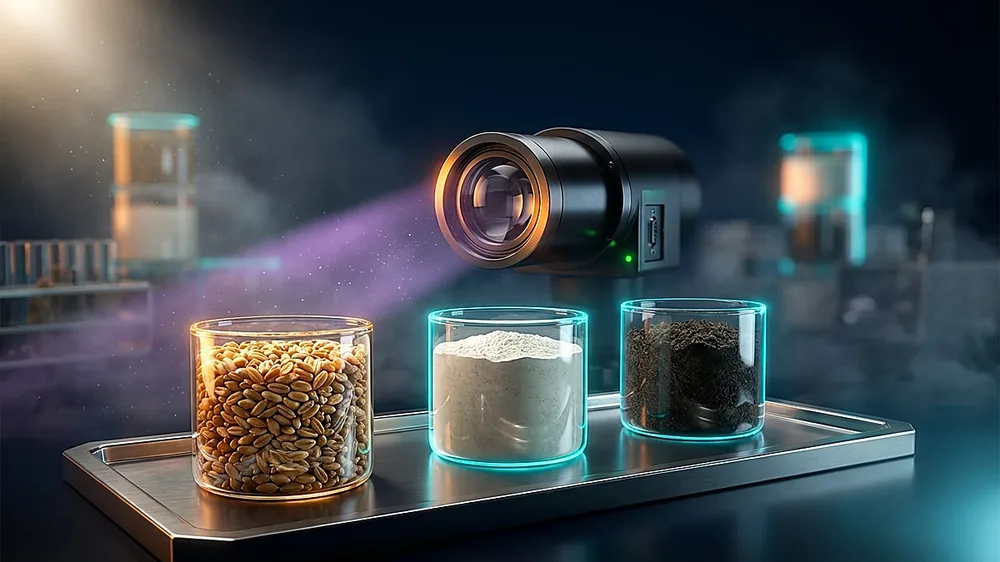
Your calibration is only as strong as the samples sitting behind it. That means pulling material from different batches, seasons, suppliers, and production conditions — not whatever happened to be on the receiving deck the week the project started. A wheat operation should include samples from multiple growing regions and harvest periods so the model accounts for both regional and seasonal variation.
Aim for 75 to 150 representative samples collected over time. For a flour mill, that means wheat from different farms and harvest windows. For a feed plant, it means real variation in ingredient blends and moisture levels. Pulling samples across several months captures the fluctuation a static snapshot will always miss.
Skip this step and the calibration breaks down. That's the single most common reason I get called in to fix one. The investment in a broad dataset pays off in fewer recalibration events and predictions you can actually trust on a Monday morning. For a deeper look at how sample representation drives model performance, see our article on NIR Calibration: Reference Data Quality and Sample Representation.
Sample Diversity: The One Thing That Kills a Calibration
If your sample set doesn't already look like your worst week of production, the model will fail the first time a real outlier shows up. Food and feed materials shift with the season, the supplier, the geography, and the processing line. Grain protein moves harvest to harvest. Dairy feed ingredients vary by region and by truckload. A calibration that hasn't seen that variability has no business predicting it.
Think of it like training a new lab tech to recognize off-spec material by smell and texture — if they've only ever handled grain from one supplier in one season, they'll be lost the first time a different origin walks through the door. Your calibration model works exactly the same way. It can only recognize what it's been shown.
That's the operational risk in plain terms: a model that looks fine in one season can quietly drift in another. During plant visits I've observed mills running models that were last updated 18 months prior, then wondering why the predictions started drifting in Q1. Spend the time upfront gathering a broad, representative dataset. It's the most practical move you can make toward a calibration that survives daily use.
Developing the NIR Calibration Model
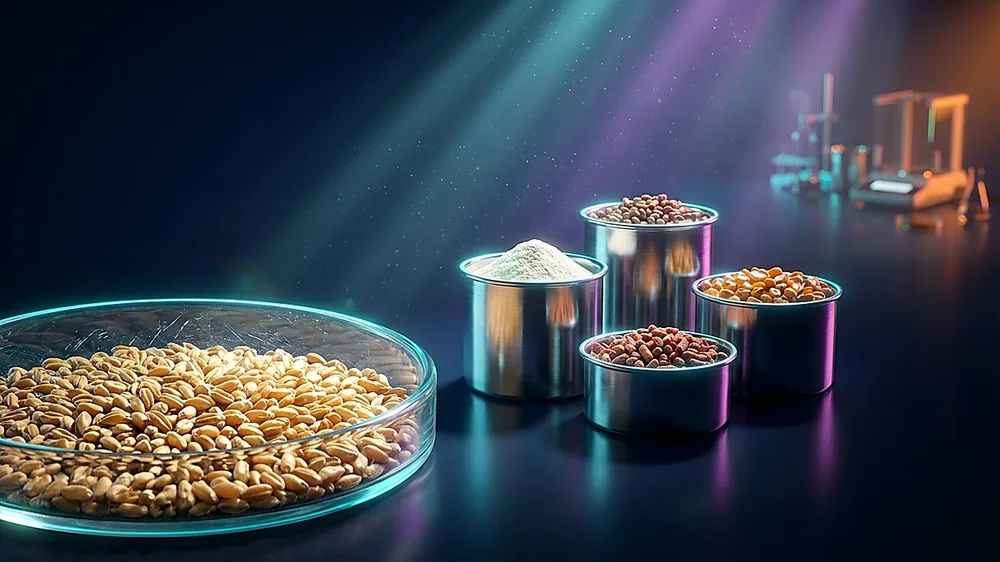
Once the sample set is in place, the model itself is the straightforward part — if you respect a few key decisions. Partial Least Squares (PLS) regression is the standard in food and feed work. It handles the collinearity that defines spectral data and connects spectral variation to the chemical property you actually care about.
Think of PLS like teaching a technician to recognize a regular supplier's corn by the full pattern of how it looks, smells, and feels — not just one trait in isolation. PLS doesn't lock onto a single wavelength. It reads the whole spectral pattern and pulls out the combinations that actually track the analyte, which is exactly what you need when moisture, fat, and protein are all absorbing in overlapping regions.
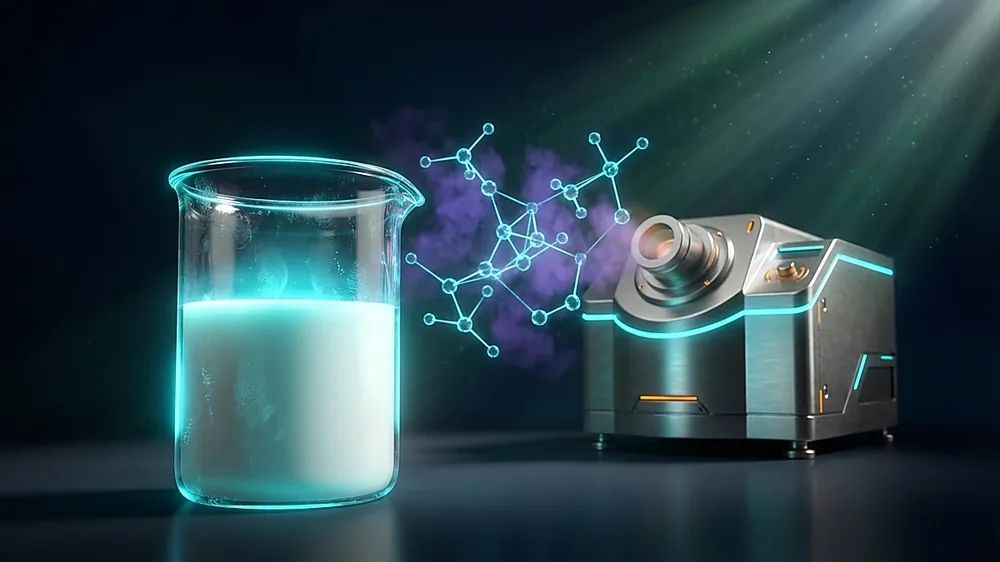
Take a dairy processor monitoring fat content in milk. A well-developed model picks up subtle composition changes batch to batch, which means tighter quality control, less waste, lower lab costs, and faster release decisions. That's the daily payoff of getting development right.
The decisions that matter: how many PLS factors you keep, which spectral preprocessing you apply — scatter correction, first or second derivatives — and which wavelength regions carry the analyte signal. Too many factors and you've overfit the noise. Too few and you've thrown away predictive power. Cross-validation during development is what tells you where the line sits. For a calibration that needs to generalize across your full supply chain, getting this balance right isn't optional.
For how PLS and related techniques work in practice, see Why NIR Spectroscopy Needs Chemometrics: PLS, PCR, and Key Techniques Explained.
Transfer vs. Building From Scratch
Don't trust a vendor calibration to predict material it has never seen. The question I get most often is whether to use a vendor-supplied calibration or build one in-house. Vendor models can serve as a starting point when the sample matrix matches theirs closely — same crop variety, same processing route, same growing region. Outside of that, global calibrations struggle with local reality.
A vendor model developed on U.S. corn won't necessarily predict well on European or South American corn. Hybrid genetics, growing conditions, and processing differences shift the spectrum in ways the global model never accounted for. I've seen a corn starch plant chase bias on a vendor calibration for months before accepting that the underlying matrix simply didn't match. The time lost — and the off-spec product released during that period — was far more expensive than building a local calibration from the start.
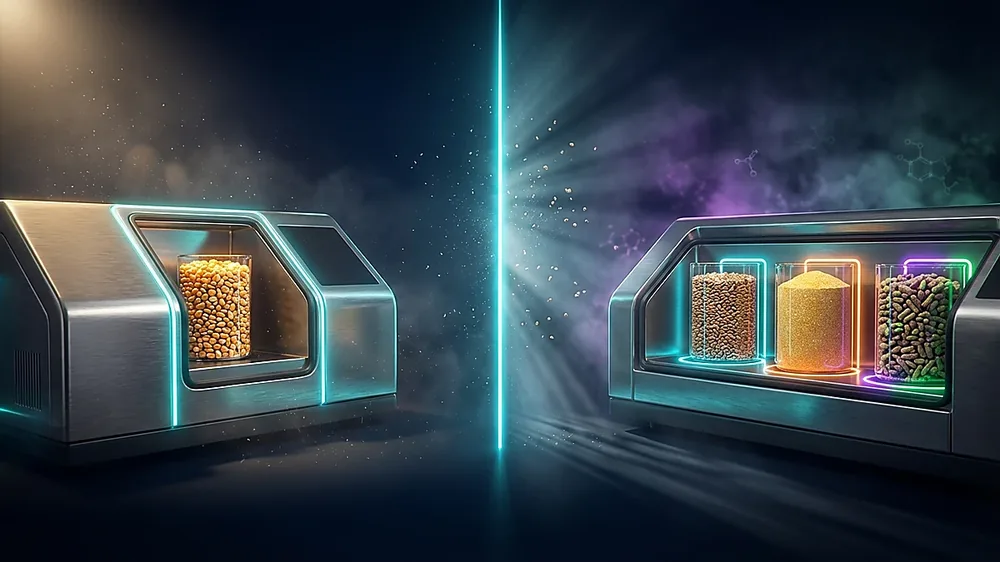
When the matrix differs meaningfully from the vendor's reference set, you need a local calibration — your samples, your reference data, your processing conditions. The pragmatic path is to start with the vendor model to get baseline performance, then progressively fold in local samples to refine or replace it. That hybrid approach saves time early and builds toward something you can rely on long-term. Either way, every transferred calibration needs validation and local adjustment before it earns a place in production decisions.
Ensuring Accurate Measurement and Calibration Maintenance
A calibration is not a deliverable — it's a living system. Raw materials change. Suppliers change. Processing tweaks happen quietly on the night shift. Each of these can move the spectrum enough to chip away at prediction accuracy without triggering any obvious alarm.
Run external validation samples on a regular cadence and you'll catch drift before it becomes a production problem. When RMSEP rises or bias starts to shift, treat it as a signal — investigate it, don't paper over it. The cause is usually instrument drift, a new ingredient source, or a change in how operators are loading the sample cup. In a pet food plant I visited, a technician had switched to a slightly different cup-fill technique — that alone introduced enough packing variation to push fat predictions 0.4% off target across an entire week of production.
When I work with clients on calibration maintenance schedules, the minimum I recommend is a formal review once per year — and an immediate review any time a major raw material source changes or a new supplier comes on board. If your grain elevator switches from one regional origin to another mid-season, that's not a "we'll handle it later" situation. That's a trigger for a calibration check the same week.
Update the model with samples collected under current conditions. An oilseed crusher I worked with started seeing steady positive bias on oil content — not because the instrument had drifted, but because a new sunflower variety from a different growing region had quietly entered the supply chain. Folding in 30 samples from that new source restored accuracy in a single update. Straightforward fix, but only because the team was running regular validation checks that caught the bias early.
For a structured way to diagnose when and why calibrations go wrong, see Diagnosing NIR Calibration Problems: A step-by-step Approach.
Practical Tips and Takeaways
- Start with a diverse and representative calibration set that covers every expected source of variation — minimum 75 to 150 samples collected across seasons, suppliers, and production conditions.
- Use PLS regression with appropriate spectral preprocessing. Validate the number of factors with cross-validation so you don't overfit the noise in your training data.
- Use high-quality reference data from a traceable, well-maintained reference method. Errors in reference values get baked directly into the model — garbage in, garbage out, every time.
- Validate and update the calibration on a schedule that matches new suppliers, seasonal shifts, and changing processing conditions. Once a year is the floor, not the target.
- Start with vendor calibrations where they fit your matrix, but plan for local refinement against your own samples and your own reference data.
- Document every calibration decision — sample sources, reference methods, preprocessing steps, validation results — so future updates are informed by history rather than guessed at.
The calibrations I see hold up year after year in food and feed plants share the same foundation: diverse representative samples, clean reference data, the right chemometric method, and ongoing validation that nobody skips. Cut a corner at any of those stages and the model becomes fragile under real operating conditions. Here's the practical test: pull your latest validation results right now and ask one question — when was the last time new samples were added to your calibration? If the answer is "last season," the clock is already running on your next prediction failure.
Continue Learning
- NIR Calibration: Why It's needed and How It Works — A detailed explanation of how NIR calibration translates spectra into chemical predictions
- NIR Calibration: Reference Data Quality and Sample Representation — How reference method quality and sample diversity determine calibration performance
- Diagnosing NIR Calibration Problems: A step-by-step Approach — A structured approach for identifying and resolving calibration failures
- NIR Calibration Overfitting: Why It Happens and Three Validation Methods — How to detect and prevent overfitting during model development
Free tool — Calibration Metrics Calculator: Enter your reference values and NIR predictions in the Calibration Metrics Calculator to compute RMSEP, RPD, R², and bias the way our course teaches it — with interpretation thresholds for grain, dairy, and feed. Open the Metrics Calculator →
Free tool — Model Diagnostics Calculator: Drop your spectra and predictions into the Model Diagnostics Calculator to flag outliers via Mahalanobis distance, use, and Q-residuals — the same diagnostics we walk through in Lesson 25. Open the Diagnostics Calculator →
SpectroScience students get access to the Calibration Validation Tracker — track RMSECV, RMSEP, bias, and slope correction across calibration updates and instrument transfers. Available as a free download in the student resource library.
Access the Excel libraryNIR Fundamentals Course — Lesson 23: Introduction to Calibration
This lesson covers the fundamentals of calibration in NIR spectroscopy, emphasizing the importance of selecting diverse and representative samples to build robust models. It aligns with the article's focus on preventing drift and ensuring that calibration models remain accurate across varying production conditions.
Explore Lesson 23 in the NIR Fundamentals courseWant to Master NIR Spectroscopy?
Our 32-lesson online course covers everything from Beer-Lambert Law to PLS calibration — built for food, grain, feed, and dairy professionals.